
The melting rate of a glass furnace, as a core indicator for measuring its production efficiency, directly determines the output of molten glass per unit time and per unit area (or volume). This indicator is not only closely related to the rationality of the furnace design and the level of process control but is also constrained by multiple factors such as raw material characteristics, technological improvements, and management factors. In the modern glass industry, increasing the melting rate has become a key path to reducing production costs and enhancing competitiveness. This article will systematically analyze five major aspects: raw material characteristics, process parameters, furnace structure, technological improvements, and management factors, with a focus on the key role of fused cast AZS blocks in improving the melting rate, striving to present the internal relationships and synergistic effects among various factors through a coherent discussion.
.jpg)
I. Raw Material Characteristics: Dual Constraints of Chemical Composition and Physical Form
The chemical composition of glass is the fundamental factor determining its melting difficulty. Higher content of high-melting-point components (such as SiO₂, Al₂O₃) leads to higher melting temperatures and longer fining times for the glass; whereas the addition of fusible oxides (such as R₂O, B₂O₃, PbO) can significantly lower the melting temperature and increase the melting rate. Industrially, the Wolf melting speed constant (τ) is commonly used to quantify the fusibility of a batch recipe, and its calculation formula varies depending on the glass type: for ordinary industrial glass, τ=(SiO₂ + Al₂O₃)/(Na₂O + K₂O); for borosilicate glass, τ=(SiO₂ + Al₂O₃)/(Na₂O + K₂O + 0.5B₂O₃). A smaller τ value indicates easier melting of the glass. Therefore, optimizing the glass batch recipe is the primary step in improving the melting rate, requiring a balance between high-melting-point components and fusible oxides based on product requirements.
The physical form of the raw materials also affects melting efficiency. Quartz sand (SiO₂) is the component with the highest melting point (1713°C) in glass raw materials, and its particle size directly affects the melting speed. Overly coarse particles reduce the contact area for heat radiation and slow down the reaction rate; overly fine particles are prone to dusting, clogging the checkerwork and affecting fining. Practice shows that the most suitable particle size for quartz sand is 0.15-0.8mm (100-24 mesh), with particles between 0.25-0.5mm (65-35 mesh) accounting for over 90%, and particles below 0.1mm (140 mesh) not exceeding 5%. Furthermore, angular quartz sand, due to its larger surface area and sufficient contact with fluxing agents, has a better melting speed than spherical sand. The homogeneity of the batch and the cullet ratio are also key factors. If quartz sand is not fully coated by fluxing agents, local high-melting-point zones can hinder the overall melting process. The addition of cullet can promote melting, but its ratio needs to be controlled between 10%-30%. Excessive cullet prolongs bubble removal time, while overly fine cullet may form a "dead layer".
II. Process Parameters: Synergistic Effects of Temperature, Atmosphere, and Feeding Method
Temperature is the core driving factor for the melting rate. Increasing the melting temperature by 10°C can increase the melting rate by approximately 10%, but the service life of refractory materials must also be considered. Modern furnaces use oxygen-enriched combustion technology to raise flame temperatures above 1800°C, enabling melting rates to exceed 3.5 t/(m²·d), while also reducing exhaust emissions. However, excessively high temperatures accelerate the erosion of refractory materials and shorten furnace life. Therefore, a balance between temperature and lifespan must be sought, achieved through optimized burner design, control of fuel-to-air ratio, and other methods for precise temperature control.
The furnace atmosphere (oxidizing, neutral, or reducing) needs to be adjusted according to the glass composition. For example, iron-containing glass is prone to coloration under an oxidizing atmosphere and requires a reducing atmosphere for suppression; while certain fining agents (such as nitrates) require specific atmospheric conditions to decompose and generate bubbles. Improper atmosphere control can lead to glass defects (such as seeds, cords) or increased energy consumption. Under a reducing atmosphere, incomplete fuel combustion reduces thermal efficiency and may produce corrosive gases (such as CO, H₂S), exacerbating refractory damage. Therefore, it is necessary to maintain a stable atmosphere inside the kiln through online monitoring and automatic adjustment systems. For example, a zirconia oxygen analyzer can be used to provide real-time feedback on the oxygen concentration and adjust the fuel and air ratio accordingly.
The feeding method and batch layer thickness directly affect melting efficiency. The thin-layer feeding method can expand the contact area between the batch layer and the flame, accelerating the thermal decomposition process. For instance, when the batch layer thickness is reduced from 200mm to 100mm, the melting time shortens by 30%, and the increased surface temperature is beneficial for bubble removal. Furthermore, continuous feeding helps maintain stable furnace temperature, avoiding fluctuations caused by intermittent feeding. Modern furnaces mostly use automated feeding systems to achieve stable improvement in melting rates by precisely controlling the feeding speed and batch layer thickness.

III. Furnace Structure: Optimization of Length-to-Width Ratio, Depth, and Partition Design
The melter length-to-width ratio affects the flow path of the molten glass and the fining time. An excessively high ratio may cause the flame to impact the opposite furnace wall, shortening furnace life; an excessively low ratio can easily lead to uneven temperature distribution. Optimizing the length-to-width ratio needs to consider the furnace scale and product characteristics. For example, large furnaces can adopt a higher length-to-width ratio to extend the residence time of the glass melt, while small furnaces need to control the ratio to avoid thermal stratification.
The melter depth and throat design need to balance heat transfer and glass melt fluidity. Excessive depth can easily form a "dead layer," leading to poor homogenization; insufficient depth may allow unmelted batch to enter the working end. Modern furnaces control the flow direction of the glass melt through the throat structure, whose cross-sectional dimensions directly affect the flow rate and temperature drop. For example, for every 100mm reduction in the height of the throat, the temperature of the molten glass can drop by 8-10℃, reducing heat loss during recirculation. Optimizing the throat design can significantly increase the melting rate while reducing energy consumption.
Flame space separation can reduce heat loss from the melter to the working end, stabilizing the forming temperature. A fully separated structure is suitable for high-quality glass production, while partial separation is used for harder glasses. The separation design must balance refractory cost and thermal efficiency. For instance, a fully separated furnace can save 3%-5% on energy consumption, but requires a higher initial investment. Enterprises need to choose the appropriate separation method based on product requirements and cost budget.
IV. Technological Improvements: Innovative Applications of Bubbling, Electric Boosting, and Insulation
Bottom bubbling technology introduces compressed air into the glass melt, forming rising bubble streams that enhance thermal convection and homogenization. This technology can increase the melting rate by 5%-8% while reducing fuel consumption. The key to bubbling technology lies in controlling bubble size and distribution, avoiding glass melt splashing or inclusions caused by overly large bubbles. Modern bubbling systems often use frequency conversion control and multi-hole nozzles to precisely adjust bubble flow rate and frequency.
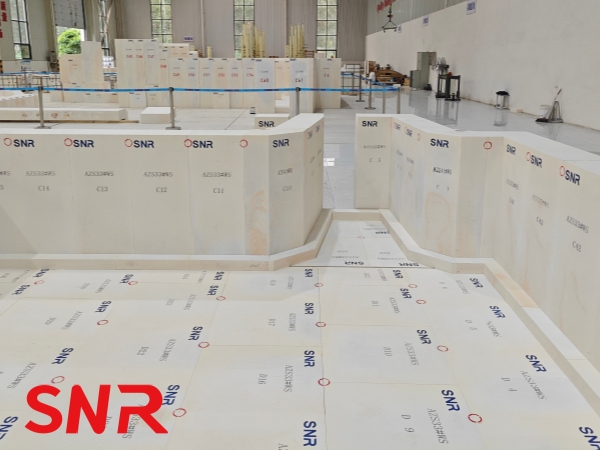
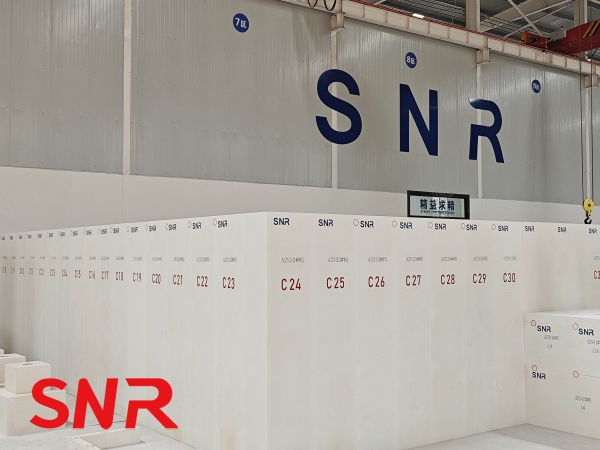
Electric boosting technology involves introducing electrodes into a flame-fired furnace to heat the glass melt via electric current, supplementing flame heating. This technology can increase production by 25%-30% and is particularly suitable for high-melting-point glasses or the production of small batches of high-value-added glass. The core equipment of electric boosting technology includes electrodes and fused cast AZS blocks, with the performance of the fused cast AZS blocks directly determining heating efficiency and service life.
.png)
Unique Advantages of Fused Cast AZS Blocks
Fused cast AZS blocks are manufactured by arc melting raw materials, offering advantages such as high purity, homogeneity, high-temperature resistance, and corrosion resistance. Their uniform chemical composition and low impurity content can reduce stone and cord defects in the glass melt. During the glass melting process, the presence of impurities can act as heterogeneous nucleation sites, promoting stone formation. The low-impurity characteristics of fused cast AZS blocks effectively avoid this issue, enhancing the purity and quality stability of the glass.
Fused cast AZS blocks can withstand temperatures above 1600°C and possess strong resistance to glass melt corrosion. In high-temperature environments, ordinary refractory materials are prone to chemical reactions with the glass melt, leading to surface spalling and erosion, which not only shortens furnace life but also introduces impurities affecting glass quality. With their excellent corrosion resistance, fused cast refractories can operate stably for long periods, extending furnace life to 8-10 years, compared to only 3-5 years for traditional fired bricks, significantly reducing furnace maintenance costs and downtime.
The thermal conductivity of fused cast AZS blocks is higher than that of ordinary firebricks, accelerating heat exchange between the glass melt and electrodes, thus improving heating efficiency. During electric boosting, the heat generated by the electrodes needs to be transferred to the glass melt through the refractory material. Fused cast AZS blocks with good thermal conductivity can transfer heat to the glass melt faster, reducing heat loss within the refractory material itself, improving energy utilization efficiency, and further lowering production costs.
Synergistic Effect of Fused Cast AZS Blocks and Electric Boosting Technology
The combination of fused cast refractories and electric boosting technology has brought revolutionary changes to glass melting. In all-electric furnaces, multi-layered fused cast AZS blocks form a uniform heating cavity, with electrodes evenly distributed inside the furnace, heating the glass melt via electric current, achieving uniform heating and efficient melting of the glass melt. Compared to traditional flame-fired furnaces, all-electric furnaces have a more uniform temperature field, avoiding local overheating or undercooling, reducing thermal stress in the glass melt, and improving glass homogeneity.
.jpg)
In partial electric boosting furnaces, fused cast AZS blocks act as key heat conduction components, complementing flame heating. Flame heating provides the main heat source, while electric boosting provides precise heating for local areas or high-melting-point glass melts. The high thermal conductivity of fused cast AZS blocks ensures that heat is transferred to the glass melt quickly and uniformly, improving overall melting efficiency. This synergy allows the furnace to adapt to the production needs of different types of glass, whether ordinary soda-lime glass or high borosilicate glass, enabling efficient and stable melting.
High-grade insulation and waste heat utilization technologies can further reduce energy consumption. Using high-quality insulation materials to thicken the furnace insulation layer can reduce heat loss by 3%-5%. Waste heat boilers can recover heat from flue gases to generate steam for production or domestic use, further saving energy. Additionally, improvements in furnace sealing technology (such as the use of flexible sealing devices) can reduce cold air infiltration and improve thermal efficiency.
V. Management Factors: The Implicit Influence of Process Execution and Equipment Maintenance
The technical level and management status of an enterprise have an implicit constraining effect on the melting rate. Mature enterprises can stabilize the melting rate and extend furnace life by strictly implementing process systems (such as mixing time, feeding frequency, temperature control). For example, establishing standardized operating procedures and quality traceability systems can ensure that each process step is executed according to established standards, reducing melting rate fluctuations caused by human factors. Simultaneously, by monitoring process parameters in real-time and analyzing data, potential issues can be identified promptly and processes adjusted, further enhancing the stability of the melting rate.
Equipment maintenance and overhaul are key to ensuring a stable melting rate. Regular inspection and maintenance of key equipment such as burners, regenerators, and electrodes can avoid melting rate fluctuations caused by equipment failures. For instance, electrode surface scaling reduces heating efficiency and requires regular cleaning; clogging of the regenerator checkerwork affects heat recovery efficiency and requires regular blowing. Enterprises should establish preventive maintenance systems for equipment, predicting failures through condition monitoring and data analysis, and taking maintenance measures in advance. For example, using vibration monitoring technology to monitor burners in real-time can detect issues like bearing wear early, avoiding unplanned downtime and ensuring melting rate stability.
Personnel training and skill enhancement are the foundation for melting rate optimization. The skill level of operators directly affects the stability of the melting rate. Enterprises should regularly conduct technical training to enhance employees' understanding and mastery of raw material characteristics, process parameters, and equipment operation. For instance, training employees to quickly adjust process parameters based on visual indicators like glass melt color and bubble distribution can reduce melting rate fluctuations caused by improper operation. Furthermore, fostering employees' innovation awareness and problem-solving abilities can also drive continuous improvement of the melting rate. Encouraging employees to propose process optimization suggestions and implementing "small improvements" projects can continuously enhance the melting rate and production efficiency.
VI. Conclusion
Improving the melting rate of glass furnaces is a systematic project that requires coordinated efforts from five major aspects: raw material optimization, process control, structural improvement, technological innovation, and management enhancement. Optimizing raw material characteristics is the foundation, requiring a balance between chemical composition and physical form; precise control of process parameters is the core, requiring dynamic synergy of temperature, atmosphere, and feeding; improvement of furnace structure is the support, requiring optimization of glass melt flow through length-to-width ratio, depth, and separation design; technological improvement is the breakthrough, where the application of fused cast AZS blocks and electric boosting technology provides key support for significant increases in melting rate. Their characteristics of high purity, homogeneity, high-temperature resistance, corrosion resistance, and high thermal conductivity make them indispensable core materials for modern glass furnaces; management enhancement is the guarantee, requiring standardized execution, equipment maintenance, and personnel training to achieve stability and continuous improvement of the melting rate. In the future, with the widespread adoption of efficient technologies such as oxy-fuel combustion and electric boosting, along with the application of intelligent control systems, the melting rate of glass furnaces is expected to achieve further breakthroughs, while simultaneously reducing both energy consumption and emissions. Enterprises should closely follow technological development trends and choose appropriate improvement paths based on their own needs to gain a competitive edge in the fierce market competition.
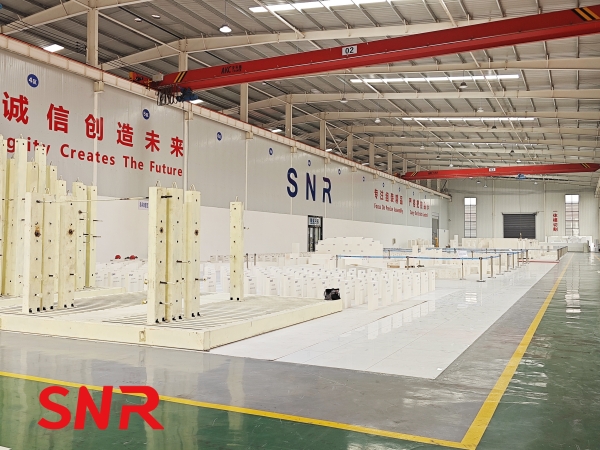
Henan SNR Refractory Co., Ltd (SNR) produces a variety of high-quality fused cast AZS blocks.If you have any needs, please contact us.