
Introduction
A glass furnace is designed to operate continuously under extremely demanding conditions. Inside the furnace, refractory materials are exposed to high temperatures, molten glass, batch materials, combustion gases, thermal cycling, and chemical corrosion for thousands of hours.
Over time, even properly selected refractories will gradually deteriorate.
The challenge is that refractory wear does not occur at the same rate throughout the furnace. Some areas may remain in good condition for many years, while others can experience accelerated corrosion, cracking, penetration, or thinning much earlier.When refractory deterioration becomes significant, the furnace operator has to make an important decision:
Should the damaged area be repaired while the furnace is still operating, or should the furnace be shut down for a more comprehensive repair?
This is the basic difference between hot repair and cold repair.
Hot repair is generally used to control localized refractory damage and extend furnace campaign life without a complete shutdown. Cold repair, on the other hand, requires the furnace to be taken out of service and cooled so that damaged refractories can be inspected, removed, and replaced more extensively.
However, repair method is only one part of the problem.
A major furnace repair also creates an opportunity to reconsider the refractory design itself.Different furnace zones experience different levels of temperature, molten glass contact, glass flow, chemical corrosion, and thermal or mechanical stress. Therefore, the refractory that performs well in one area may not necessarily be the best choice for another.
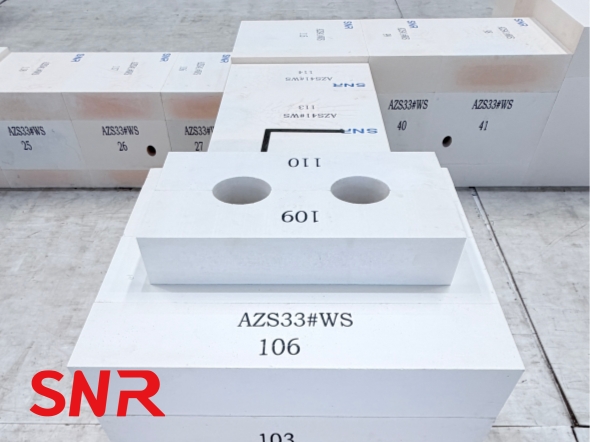
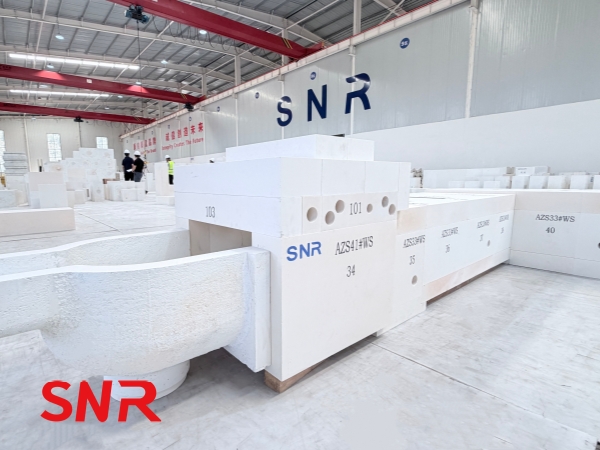
This is particularly important when selecting fused cast AZS blocks, which are widely used in critical glass-contact areas. AZS 33, AZS 36, and AZS 41 provide different levels of performance and may be considered for different service conditions.
The objective is not to use the highest-grade refractory everywhere.It is to select the right refractory for the right furnace zone.
This article examines the difference between hot repair and cold repair, explains why refractory zoning matters, and discusses how AZS grades can be selected according to actual furnace conditions.
1. When Does a Glass Furnace Need Repair?
Refractory wear is an unavoidable part of glass furnace operation. Even high-quality materials will gradually deteriorate when exposed to high temperatures and molten glass for long periods.
The challenge for furnace operators is determining when normal refractory wear has become a condition that requires intervention.
A furnace rarely reaches a point where all refractory materials fail at the same time. Instead, deterioration usually develops gradually and may first appear through changes in furnace operation.
1.1 Common Signs of Refractory Deterioration
Several conditions may indicate that a refractory area requires closer attention.
Localized Hot Spots
An abnormal increase in temperature on the furnace shell or around a refractory section may indicate that the lining has become thinner or that heat is passing through the area more easily.
A hot spot does not automatically mean that the refractory has failed, but it should be investigated before deterioration becomes more serious.
Glass Leakage or Penetration
Glass penetration through joints, cracks,or heavily corroded refractory can be a significant warning sign.If molten glass reaches areas that were not designed for direct glass contact, further refractory or structural damage may occur.
Accelerated Corrosion
Some furnace areas naturally experience higher corrosion rates than others. However, unusually rapid or localized corrosion may indicate that the refractory is approaching the end of its useful service life.
Glass Quality Problems
Refractory deterioration can also affect glass quality.
Corroded refractory may contribute to stones, inclusions, or other defects in the glass. When glass quality changes unexpectedly, refractory condition should therefore be considered as one possible cause.
Cracking and Structural Damage
Cracks may result from thermal stress, mechanical loading, installation problems, or operating conditions.
Not every crack requires immediate repair, but progressive or significant cracking should be evaluated carefully.
1.2 How Should the Repair Decision Be Made?
A single symptom is rarely enough to determine whether hot repair, cold repair, or continued operation is appropriate.
The decision should consider:
l location of the damage;
l deterioration rate;
l remaining refractory thickness;
l operating temperature;
l glass composition;
l glass flow;
l expected remaining campaign life;
l potential impact on glass quality;
l safety and structural risks.
The same level of wear may require different actions in different furnace zones.For example, localized deterioration in a less critical area may be monitored, while similar deterioration in a critical glass-contact zone may require earlier intervention.
The objective is not necessarily to replace refractory as soon as any wear appears.
Premature repair can create unnecessary downtime and cost, while delaying a necessary repair may increase operational risk.
The most effective approach is to monitor refractory condition, identify developing problems early, and determine whether localized intervention can safely extend the furnace campaign or whether a more comprehensive repair is required.
2. What Is Cold Repair of a Glass Furnace?
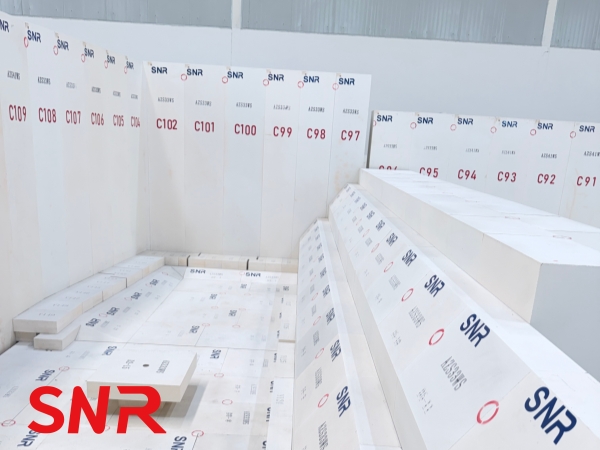
When refractory deterioration becomes too extensive for localized intervention, a glass furnace may need to be taken out of service for a more comprehensive repair. This is known as cold repair.
Unlike hot repair, cold repair requires the furnace to be shut down and cooled before major refractory work begins.
In simple terms:
Cold repair means shutting down and cooling the furnace so that damaged refractories can be inspected, removed, and replaced under controlled conditions.
2.1 What Happens During a Cold Repair?
A typical cold repair may follow a sequence such as:
Furnace shutdown → Glass drain-out → Controlled cooling → Inspection → Demolition → Refractory installation → Furnace heat-up → Production restart
The exact procedure depends on the furnace design, repair scope, glass type, and condition of the existing lining.
Controlled cooling is particularly important. Large refractory blocks have considerable thermal mass, and rapid temperature changes can create thermal stresses that may cause cracking or other damage.Therefore, the furnace should be cooled according to a controlled procedure rather than simply being switched off.
2.2 The Main Advantage: Full Access
The greatest advantage of cold repair is access.
Once the furnace has been sufficiently cooled, engineers and construction teams can inspect areas that are inaccessible during normal operation.
Depending on the repair scope, they may examine:
l AZS blocks;
l sidewalls and breastwalls;
l bottom refractories;
l throat areas;
l burner blocks;
l doghouse areas;
l silica superstructure;
l expansion joints;
l insulation and supporting structures.
This allows the actual condition of the furnace to be evaluated instead of relying only on operating data or external observations.
The used refractory can also provide valuable information about the previous campaign. Corrosion depth, joint penetration, cracks, and localized wear patterns can show which areas performed well and which areas deteriorated faster than expected.
2.3 Does Cold Repair Mean Replacing Everything?
Not necessarily.
A cold repair allows the furnace to be evaluated zone by zone.
Some refractory areas may still have sufficient remaining thickness and acceptable structural condition, while others may require complete replacement.
The repair may therefore range from selected refractory replacement to a major furnace rebuild.
More importantly, the new refractory design does not always have to be identical to the previous one.If a particular area experienced premature corrosion, the repair team should investigate the possible causes before simply installing the same material again.
Factors such as glass chemistry, operating temperature, glass flow, refractory thickness, thermal stress, and previous campaign performance should be considered.
2.4 Cold Repair as an Opportunity for Improvement
A furnace shutdown is costly because production stops, but it also provides an opportunity that hot repair cannot easily offer: reconsidering the refractory design for the next campaign.
Different furnace zones experience different service conditions.
Therefore, using one refractory grade throughout the furnace may not always be technically or economically appropriate.
The actual condition of the old lining can help engineers determine whether certain zones should retain the existing refractory grade, be upgraded, or use a different configuration.
This is where refractory zoning becomes important.
A well-planned cold repair should therefore do more than restore the furnace. Where possible, it should use the lessons from the previous campaign to improve the refractory system for the next one.
.png)
2.5 The Main Limitation: Downtime
The major disadvantage of cold repair is production interruption.
The furnace must stop producing glass, and considerable time may be required for cooling, demolition, construction, and controlled reheating.
For this reason, major cold repairs are normally planned well in advance.
Refractory materials, block dimensions, construction resources, equipment, and schedules can be prepared before the shutdown begins.
A properly planned cold repair can therefore restore damaged areas while also providing the foundation for a more reliable and better-optimized furnace campaign.
3. What Is Hot Repair and How Is It Different?
Unlike cold repair, hot repair is carried out while the glass furnace remains at elevated temperature and, in many cases, continues operating.
Its main purpose is not to rebuild the furnace, but to control localized refractory damage and extend the remaining furnace campaign without a complete shutdown.
For glass manufacturers, this can be a major advantage because production can often continue while the problem is being addressed.
3.1 What Is Hot Repair?
Hot repair refers to maintenance work performed while the furnace remains hot.
Because the furnace cannot be completely emptied and cooled, access to the refractory lining is limited. Hot repair therefore focuses on specific problem areas rather than the entire furnace structure.
Typical objectives include:
l slowing refractory corrosion;
l protecting exposed furnace structures;
l sealing damaged joints or cracks;
l reinforcing locally weakened areas;
l reducing further glass penetration;
l extending furnace campaign life.
The exact method depends on the refractory type, damage mechanism, temperature, and accessibility of the affected area.
3.2 Common Hot Repair Methods
Different techniques may be used depending on the application.
Refractory patching can restore protection to localized worn surfaces.
Gunning uses pneumatic equipment to project refractory material onto damaged areas and can be useful where direct access is difficult.
Ramming materials may be used for suitable localized repairs where installation conditions allow.
In some situations, individual bricks or blocks may also be replaced, although this is much more difficult than replacement during cold repair because temperature, glass level, access, and surrounding refractory conditions must be carefully controlled.
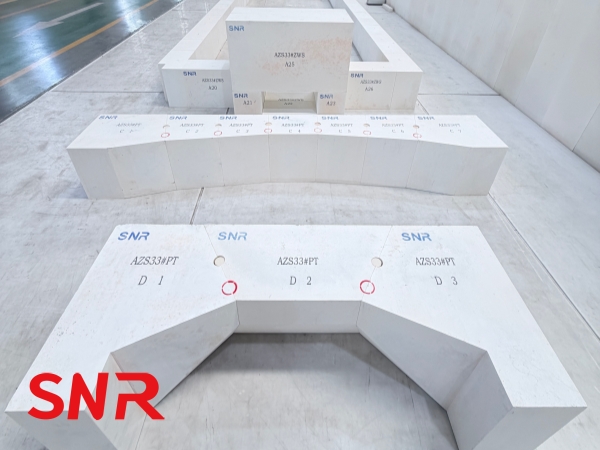
For fused cast AZS blocks areas, hot repair is generally intended to protect the remaining refractory and slow further deterioration rather than recreate a completely new fused cast AZS block in place. The repair method should be selected according to the actual failure mechanism. A repair material applied without understanding the cause of deterioration may provide only temporary improvement.
3.3 Advantages and Limitations
The greatest advantage of hot repair is reduced production interruption.The furnace can often continue operating, avoiding the cooling, demolition, construction, and reheating process associated with cold repair.
However, the furnace remains hot, so access and inspection are restricted.
Hot repair is generally more suitable for:
l localized corrosion;
l accessible damaged areas;
l cracks or joints;
l surface deterioration;
l temporary stabilization of weakened sections.
It is less suitable when large sections of the lining have failed, multiple zones require replacement, structural damage is suspected, or major redesign is necessary.In such situations, repeated hot repairs may simply postpone a necessary cold repair.
3.4 Hot Repair as a Campaign-Extension Strategy
Hot repair is best understood as part of furnace campaign management.
A typical sequence may be:
Normal operation → Localized wear → Condition monitoring → Hot repair → Continued operation → Planned cold repair
The objective is not necessarily to restore the refractory to its original condition. Instead, the goal is to keep the furnace within an acceptable operating condition for as long as safely and economically possible.
If the same area repeatedly requires repair, the recurring problem should be investigated.
Possible causes include:
l unsuitable refractory selection;
l excessive local temperature;
l aggressive glass chemistry;
l abnormal glass flow;
l insufficient refractory thickness;
l joint or installation problems;
l changes in furnace operation.
Hot repair records can therefore provide useful information when planning the next furnace campaign.
3.5 Hot Repair vs. Cold Repair
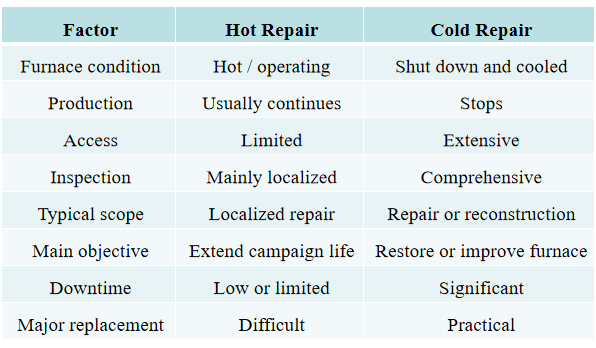
Neither method is universally better.
Hot repair is valuable when localized deterioration can be safely controlled without stopping the furnace.Cold repair is more appropriate when the furnace requires extensive access, replacement, inspection, or redesign.
The two approaches should therefore be considered as complementary parts of furnace maintenance rather than competing methods.

4. Why Refractory Zoning Matters in Glass Furnaces
A glass furnace may appear to be one large refractory structure, but from a refractory engineering perspective, it consists of many different service zones.
The melting area, sidewalls, throat, working end, and other glass-contact areas can experience significantly different temperatures, glass flow, corrosion, and mechanical or thermal stress.
This is why refractory zoning is essential.
4.1 What Is Refractory Zoning?
Refractory zoning means selecting different refractory materials or grades for different furnace areas according to their actual operating conditions.
Instead of asking:
“What is the best refractory for the whole furnace?”
the better question is:
“What refractory is appropriate for each specific zone?”
The most expensive refractory is not automatically the best solution.
A high-performance material may be unnecessary in a relatively mild area, while a lower-cost material may not provide sufficient service life in a highly aggressive zone.
The objective is to match material performance with actual service requirements.
4.2 Why Do Furnace Zones Have Different Requirements?
Several factors influence refractory wear.
Temperature
Higher temperatures can increase the severity of the refractory environment, although temperature must be considered together with glass chemistry and other operating conditions.
Glass Composition
Different glass compositions can produce different corrosion environments. A refractory suitable for one glass type may not provide the same service life in another.
Glass Flow
Moving glass can increase localized wear. Throat regions and other areas with concentrated glass movement may therefore require special consideration.
Mechanical and Thermal Stress
Large refractory blocks are exposed to thermal gradients, expansion and contraction, and mechanical loading. These conditions can influence cracking and structural stability.
Batch and Atmosphere
Some areas may also experience greater exposure to batch materials, combustion gases, dust, or different furnace atmospheres.
The combination of these factors determines the actual service environment of each zone.
4.3 What Happens When Zoning Is Poor?
Poor zoning can create two opposite problems.
Over-specification occurs when a high-performance refractory is used in areas where its additional performance provides little practical benefit. This increases the initial refractory cost.
Under-specification occurs when a refractory with insufficient resistance is used in a demanding zone. Faster deterioration can then lead to more frequent repair, glass-quality risks, or a shorter campaign.
Good zoning aims to avoid both extremes.
4.4 Use Previous Campaign Performance
The original furnace design is an important starting point, but the condition of the refractory after a campaign can provide even more useful information.
During a cold repair, engineers can compare:
l remaining refractory thickness;
l corrosion depth;
l joint penetration;
l cracking;
l wear differences between zones.
If one area shows significantly deeper corrosion than expected, its original refractory specification may need to be reconsidered.
This creates a continuous improvement cycle:
Furnace operation → Refractory wear → Inspection → Analysis → Improved zoning → New furnace campaign
For this reason, refractory zoning should be based not only on general industry practice, but also on the actual operating history of the furnace.
5. AZS 33, AZS 36, and AZS 41: How to Choose the Right Grade
Among fused cast AZS blocks, AZS 33, AZS 36, and AZS 41 are commonly considered for glass furnace applications.
The numbers generally indicate the approximate zirconia content of the material:
l AZS 33 — approximately 33% ZrO₂
l AZS 36 — approximately 36% ZrO₂
l AZS 41 — approximately 41% ZrO₂
Higher zirconia content can improve resistance to certain molten glass corrosion conditions, but it does not mean that a higher grade is automatically the best choice for every application. However, zirconia content alone does not determine the complete performance of an AZS block.
Manufacturing process, microstructure, chemical composition, density, block design, and actual furnace conditions also influence performance.
Therefore, AZS selection should not be based on the number alone.
5.1 AZS 33 — An Economical Option for Suitable Conditions
AZS 33 may be considered for furnace zones where corrosion conditions are relatively moderate and the highest zirconia content is not necessary.
Its main advantage is the balance between corrosion resistance and cost.
If previous campaign performance shows that a particular area experiences controlled wear, upgrading to a higher AZS grade may not provide enough additional benefit to justify the extra cost.
AZS 33 should therefore not simply be viewed as a “low-grade” refractory.Where the service conditions are appropriate, it can be a practical and economical solution.
5.2 AZS 36 — A Balanced Choice
AZS 36 provides a higher zirconia content than AZS 33 and may be considered when stronger corrosion resistance is required.
It can provide a useful balance between:
corrosion resistance + service life + material cost.
For many applications, this balance is important because refractory selection should consider expected furnace campaign life rather than material price alone.
5.3 AZS 41 — For More Severe Conditions
AZS 41 contains a higher zirconia content and may be considered for more demanding glass-contact conditions.
It can be appropriate where the refractory is exposed to particularly aggressive corrosion or other severe service conditions.
However, using AZS 41 throughout an entire furnace does not automatically produce the best result.
If a zone can achieve the required service life with AZS 33 or AZS 36, the additional cost of AZS 41 may not provide a meaningful economic benefit.
5.4 Is AZS 41 Always Better?
Not necessarily.
A higher grade should be selected when its additional performance is justified by the actual service environment.
A simplified way to understand the selection is:
Moderate conditions → AZS 33 may be sufficient
More demanding conditions → AZS 36 may provide a better balance
Severe conditions → AZS 41 may be justified
These are general guidelines rather than fixed rules.
Two furnaces with similar capacities may require different AZS specifications because their glass compositions, temperatures, operating conditions, or refractory histories are different.
5.5 What Should Be Considered Before Selection?
Before selecting an AZS grade, consider:
Glass Composition
The chemistry of the glass has a direct influence on the corrosion environment.
Operating Temperature
Temperature affects the severity of the operating environment and should be evaluated together with glass chemistry.
Glass Flow
Areas exposed to strong glass movement may experience more localized wear.
Furnace Zone
The exact location of the block is critical because different areas have different service conditions.
Previous Campaign Performance
Actual refractory wear is one of the most valuable references for the next specification.
Cost and Expected Service Life
The cheapest refractory is not necessarily the most economical, and the most expensive refractory is not necessarily the best value.
The objective is to achieve the required service life at an appropriate total cost.
6. Applying AZS Selection to Different Furnace Zones
Understanding AZS grades is only the first step. The real challenge is applying them correctly to an actual furnace.There is no universal rule that assigns one AZS grade to every furnace zone. The final specification should be based on furnace design, glass type, operating conditions, previous campaign performance, and expected service life.
6.1 Start With the Furnace Zone
The first step is to identify exactly where the fused cast AZS block will be installed.A critical glass-contact area may face much more severe conditions than a relatively moderate zone.
The throat and other areas with strong glass flow may also require different consideration from areas with less movement.
Therefore, the furnace should be divided into practical refractory zones before material selection begins.
6.2 Evaluate the Actual Service Conditions
For each zone, consider:
l glass composition;
l operating temperature;
l glass flow;
l corrosion severity;
l refractory thickness;
l thermal conditions;
l expected campaign length;
l previous wear patterns.
This prevents the selection process from becoming a simple comparison of AZS grades.
6.3 Use Previous Wear as a Reference
One of the most useful sources of information is the refractory that has already been used in the furnace.
If an area using AZS 33 performed well and retained sufficient thickness, there may be no technical reason to automatically upgrade it.
If another zone experienced significantly accelerated corrosion, the next campaign may justify a higher-performance grade or a change in the refractory configuration.
The important point is to understand why the previous refractory performed as it did.
6.4 A Practical Zoning Approach
As a general framework:
Moderate-duty zone: Consider an economical AZS grade when corrosion and operating conditions are relatively controlled.
More demanding zone: Consider a balanced grade where greater corrosion resistance is required.
Highly aggressive or critical zone: Consider a higher-performance AZS grade when the service conditions justify it.
This does not mean that every furnace should follow the same AZS arrangement.
The actual specification should be developed from the conditions of the individual project.
6.5 Why “Use the Highest Grade Everywhere” Is Not the Best Strategy
Using the highest AZS grade throughout the furnace may appear to minimize risk, but it can also lead to unnecessary cost.
Refractory selection is an optimization problem.
The goal is to provide enough performance to achieve the required campaign life while avoiding unnecessary over-specification.
For example, if a moderate zone can achieve satisfactory performance with AZS 33, replacing it with AZS 41 may increase material cost without producing a proportional improvement in furnace life.
On the other hand, using a lower grade in a highly aggressive zone simply to reduce the initial purchase price may increase the risk of premature deterioration.
The best solution lies between these two extremes.
6.6 The Practical Selection Process
A useful selection process can be summarized in five steps:
1. Identify the furnace zone.
Determine the exact location and function of the refractory.
2. Understand the operating conditions.
Evaluate glass chemistry, temperature, glass flow, and other relevant factors.
3. Review previous campaign performance.
Examine corrosion, remaining thickness, cracks, penetration, and repair history.
4. Select the appropriate AZS grade.
Consider whether AZS 33, AZS 36, or AZS 41 provides the required performance.
5. Balance performance and cost.
Choose the grade that can provide the required service life without unnecessary over-specification.
This approach turns AZS selection from a simple product comparison into a more complete refractory engineering decision.
Conclusion — Selecting the Right Refractory for a Longer Furnace Campaign
Glass furnace refractory repair is not simply a matter of replacing damaged bricks.
Hot repair and cold repair serve different purposes. Hot repair can control localized deterioration and extend furnace campaign life, while cold repair provides the access needed for comprehensive inspection, replacement, and improvement.
Both methods depend on understanding the actual condition of the furnace.
The same principle applies to refractory selection.
Different furnace zones experience different levels of temperature, glass contact, corrosion, and glass flow. Therefore, using the same refractory grade throughout the furnace may not always provide the best combination of performance and cost.
For fused cast AZS, AZS 33, AZS 36, and AZS 41 offer different performance levels and may be considered according to the requirements of each zone.
The key is not to select the most expensive material.
It is to select the right refractory for the right zone and the actual operating conditions.
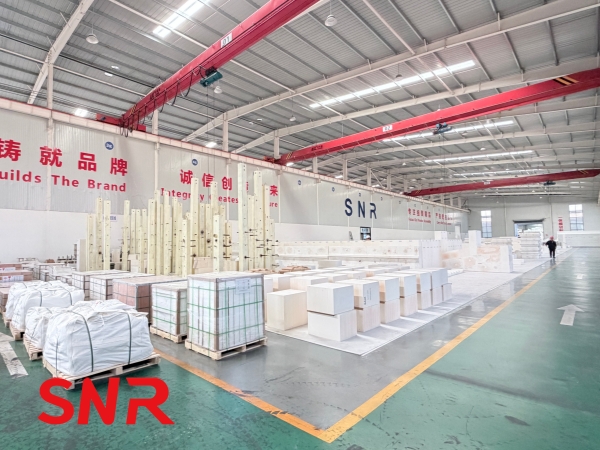
At Henan SNR Refractory Co., Ltd., we focus on fused cast AZS blocks and refractory solutions for glass furnace applications. Based on furnace conditions and project requirements, SNR can help customers evaluate suitable AZS grades, block designs, and refractory configurations for different furnace zones.
A well-planned refractory system can help reduce unnecessary material costs, control corrosion, and support a more reliable and longer furnace campaign.
If you are planning a new glass furnace, furnace repair, or refractory replacement project, the refractory specification should be considered together with the actual service conditions of each furnace zone.
 Email: [email protected]
