
As the core thermal equipment in glass production, glass furnaces operate for long periods under harsh conditions, including high temperatures, strong corrosion, severe temperature fluctuations, and continuous molten glass erosion. Under such conditions, the refractory materials of the furnace structure are highly susceptible to erosion, spalling, cracking, and even structural damage, which directly affects the furnace service life, production efficiency, and the quality of glass products.
Cold repair is a critical stage in the maintenance of glass furnaces. It aims to restore normal operating performance through comprehensive inspection and replacement of damaged components. Fused cast AZS blocks, as the key materials used in critical furnace areas, are widely applied in cold repair due to their high strength, high refractoriness, excellent resistance to molten glass corrosion, and superior thermal shock resistance.
The quality of fused cast AZS blocks directly determines the operational stability and service life of the furnace after repair. Therefore, strictly adhering to their usage requirements and standardizing the operational procedures is a fundamental prerequisite for ensuring the quality of glass furnace cold repair. Based on the actual working conditions of glass furnace cold repair and relevant industry standards, this article provides a detailed overview of the usage requirements of fused cast AZS blocks throughout the entire process, including pre-repair preparation, material selection, installation and construction, furnace heat-up and curing, as well as post-repair operation and maintenance, offering technical guidance for glass furnace cold repair practices.
2. Selection Requirements for Fused Cast AZS Blocks in Glass Furnace Cold Repair
3. Installation Requirements for Fused Cast AZS Blocks in Glass Furnace Cold Repair
4. Usage Requirements for Fused Cast AZS Blocks During Post-Repair Furnace Heat-Up and Curing
5. Post-Repair Operation and Maintenance Requirements for Fused Cast AZS Blocks in Glass Furnaces
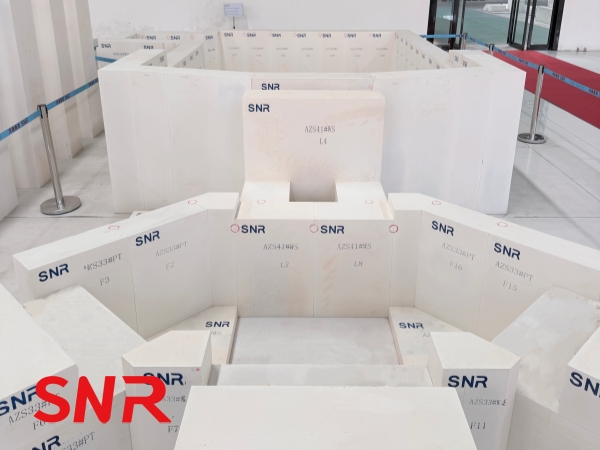
The preparation work before glass furnace cold repair forms the foundation for the proper use of fused cast AZS blocks. The core tasks include clarifying repair requirements, assessing the condition of the furnace structure, and standardizing the storage and pre-treatment of fused cast AZS blocks. These steps are essential to prevent potential quality risks caused by inadequate preparation and to ensure the orderly progress of the cold repair process.
1.1 Assessment of Cold Repair Requirements and Inspection of Furnace Condition
Before cold repair, it is necessary to comprehensively evaluate the extent of furnace damage based on the furnace service life, daily operating data, and failure records, to clearly define the scope and application areas for fused cast AZS block replacement.
First, professional inspection methods should be employed to assess the erosion, wear, and cracking conditions of fused cast AZS blocks in various parts of the furnace. Particular attention should be paid to critical areas that are highly susceptible to molten glass corrosion and high-temperature scouring, such as the melting tank sidewalls, tank bottom, throat, doghouse, and burner ports. Based on this inspection, the quantity, specifications, and performance requirements of the fused cast AZS blocks to be replaced should be determined. For example, fused cast AZS blocks at the tank bottom near the charging area are often severely eroded due to molten glass flow and metal penetration; therefore, their remaining thickness and structural integrity must be carefully evaluated. In bubbling zones, where intensified melt agitation accelerates erosion, it is necessary to check for defects such as corrosion pits and edge spalling.
At the same time, the type of glass product (such as float glass or container glass) should be considered to define the post-repair operating parameters of the furnace, including maximum operating temperature, type of molten glass, and campaign duration. These factors provide a basis for the proper selection of fused cast AZS blocks.
In addition, residual molten glass, slag, and other debris inside the furnace must be thoroughly removed. The steel structure of the furnace should be inspected for verticality, levelness, and welding quality to ensure that the foundation for refractory installation meets the required standards. This helps prevent uneven stress distribution after installation, which could otherwise lead to cracking and damage of the fused cast AZS blocks due to uneven surfaces or remaining debris.
1.2 Storage Requirements for Fused Cast AZS Blocks
The storage quality of fused cast AZS blocks directly affects their performance during use. Before cold repair, storage procedures must be strictly standardized to prevent moisture absorption, contamination, or damage.
First, fused cast AZS blocks should be stored in a dry, well-ventilated, and moisture-proof warehouse. The warehouse floor should have a moisture barrier to prevent direct contact between the blocks and the ground, avoiding water absorption. If the blocks become damp, their internal structure may change, making them prone to thermal shock cracking under high temperatures after installation, which reduces service life.

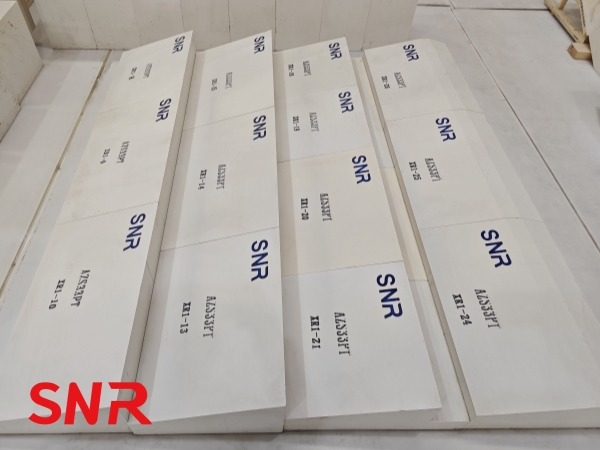
Second, blocks should be sorted and stacked according to specifications, model, and material type, with clear labeling to prevent mixing and misapplication. During stacking, blocks must be neatly arranged, and the stacking height should not be excessive to avoid deformation or damage to the bottom layers. During handling, blocks must be lifted carefully using appropriate pallets and packaging; tossing or striking the blocks is strictly prohibited to prevent corner breakage or surface scratches, which could compromise the sealing and stability of the masonry.
Additionally, the condition of stored blocks should be regularly inspected. If any moisture, contamination, or other issues are found, the blocks must be dried and cleaned promptly to ensure that they remain dry, intact, crack-free, undamaged, and free of attached debris throughout storage.
1.3 Pre-Treatment Requirements for Fused Cast AZS Blocks
Before cold repair construction, fused cast AZS blocks must undergo pre-treatment to remove surface impurities, oil, and moisture, and to correct dimensional deviations, thereby ensuring proper installation quality.
First, the block surfaces should be cleaned using high-pressure air blowing or water rinsing to remove dust, slag, oil, and other contaminants. For stubborn stains, a neutral cleaning agent may be used, followed by thorough rinsing with clean water and drying before use. This prevents impurities from affecting the bonding strength of the refractory mortar, which could otherwise lead to flame or molten glass leakage through joints.
Second, dimensional inspection of the fused cast AZS blocks must be carried out in accordance with design drawings. Measurements should include length, width, thickness, and diagonal dimensions. Blocks with dimensional deviations exceeding the allowable tolerance (generally within ±1 mm) must be cut or ground to meet installation requirements. In particular, large tank bottom blocks should be machined on all six faces, with surface flatness deviation controlled within ±0.5 mm.
For the reuse of old fused cast AZS blocks, pre-treatment requirements are more stringent. Their appearance and quality must first be inspected, and samples should be sent to an authorized refractory testing institution for a quality inspection report. If the blocks are to be used in areas directly contacting molten glass, such as paving blocks or sidewalls, their chemical composition must also be tested to ensure no adverse effect on glass quality.
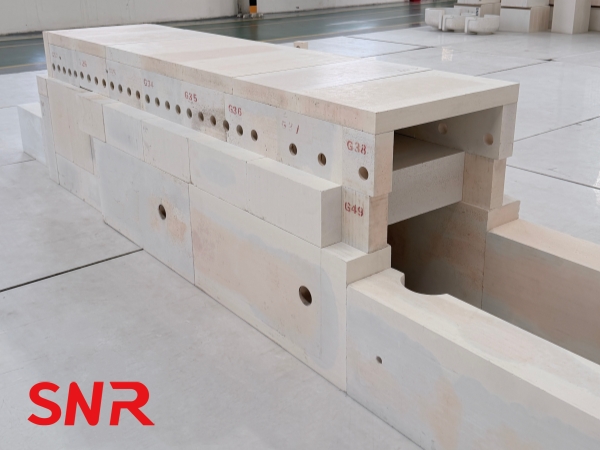
At the same time, all residual glass slag, metallic inclusions, eroded or burnt layers, cavities, corrosion damage, chipped edges, and fractured portions on the working surface must be removed to ensure the reused bricks meet performance requirements.
Finally, after pre-treatment, all fused cast AZS blocks must be re-inspected to confirm that they are free of cracks and damage, and that their dimensions meet the required standards before being approved for installation.

2. Selection Requirements for Fused Cast AZS Blocks in Glass Furnace Cold Repair
The selection of fused cast AZS blocks is a core factor in ensuring the quality of cold repair. The choice must consider the working conditions of different furnace areas, operating parameters, and the type of glass product, selecting refractories that are performance-matched and of qualified quality. Improper selection may lead to premature erosion or damage of the blocks, shortening the furnace's service life. Commonly used fused cast AZS blocks in glass furnace cold repair include fused zirconia–alumina (AZS) blocks, fused alumina–magnesia blocks, and fused alumina blocks. Different types have significant differences in performance and are suitable for different parts of the furnace. Selection must strictly follow the requirements below.
2.1 Core Principles of Selection
Matching Working Conditions:The refractoriness, high-temperature strength, resistance to molten glass corrosion, and thermal shock resistance of fused cast AZS blocks must match the working conditions of the specific furnace area. For example, in the melting section, sidewalls, and tank bottom—areas directly exposed to high-temperature molten glass (up to 1500–1600 ℃)—fused zirconia–alumina blocks with high refractoriness, strong corrosion resistance, and stable high-temperature structure should be selected. In contrast, flues and regenerators, with lower temperatures (800–1200 ℃) and primarily exposed to flue gas, can use more cost-effective fused alumina–magnesia or clay blocks.
Quality Compliance:Selected fused cast AZS blocks must comply with national standards and industry regulations, accompanied by a product quality certificate and performance test report to ensure that chemical composition and physical properties meet requirements. The use of substandard products is strictly prohibited to avoid problems such as flame leakage, molten glass leakage, or spalling after repair.
Economic Considerations:While meeting working conditions and quality requirements, selection should also consider cost-effectiveness. For non-critical areas, blocks with standard performance and high cost-efficiency can be used. For critical areas, high-performance and high-stability fused cast AZS blocks must be selected to ensure long-term stable furnace operation. Wherever possible, standard-sized, prefabricated blocks should be chosen for faster supply and installation.
Compatibility:The material of fused cast AZS blocks must be compatible with adjacent refractory materials and installation mortar. Large differences in material properties may lead to poor bonding at joints or mismatched thermal expansion, causing cracking or spalling. For example, when fused zirconia–alumina blocks are installed adjacent to silica bricks, a compatible special mortar should be used to reduce stress caused by differential thermal expansion.
2.2 Specific Selection Requirements by Furnace Area
Melting Section:
The melting section is the core part of the furnace, with the highest temperatures and the most severe molten glass erosion, also exposed to high-temperature flame scouring. The sidewalls, tank bottom, and throat, which are in direct contact with molten glass, must use fused cast AZS blocks. The surface layer of the tank bottom can use void-free casting AZS blocks to enhance erosion resistance. Areas exposed to flame and molten glass splashing, such as doghouses and burner ports, require high-strength, high-density AZS blocks, with thickness determined by erosion severity, generally no less than 150 mm. Near the doghouse, tank bottom blocks are vulnerable to metal penetration; therefore, blocks with enhanced impermeability should be selected.
Regenerators and Flues:
Regenerators are mainly used for recovering flue gas heat, with temperatures of 800–1200 ℃, exposed to flue gas erosion and temperature fluctuations. Fused alumina–magnesia or fused alumina blocks with good resistance to flue gas corrosion and thermal shock stability are recommended to prevent cracking. Flues, at relatively lower temperatures and exposed to acidic gases in flue gas, can use fused clay blocks or ordinary fused alumina–magnesia blocks, ensuring good corrosion resistance and tightness.
Doghouse and Outlet:
Doghouses are subject to impact from raw glass materials, high-temperature flame scouring, and molten glass splashing, leading to wear and erosion. High-strength, wear-resistant, and corrosion-resistant AZS blocks should be used. Block surfaces should be ground to ensure smoothness, reducing wear from material impact. Outlets, in contact with high-temperature molten glass and subjected to flow erosion, require dense, corrosion-resistant AZS blocks with sufficient expansion gaps to avoid damage from thermal expansion.
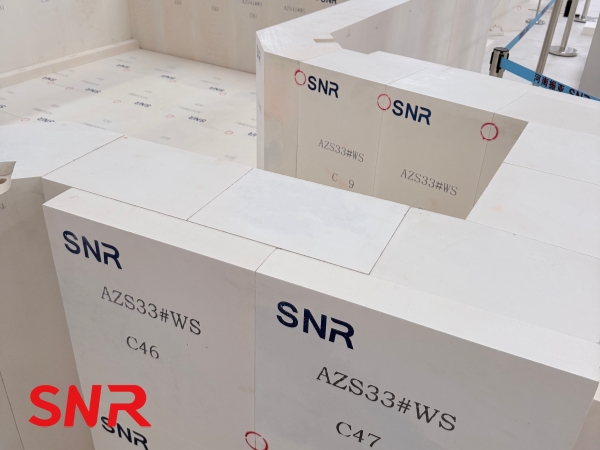

Other Areas:
For non-direct-contact areas such as furnace arches and sidewalls, temperatures range from 1200–1400 ℃, exposed to high-temperature radiation and flue gas erosion. Fused alumina or fused alumina–magnesia blocks are suitable, with good high-temperature strength and thermal shock stability to ensure structural stability of the arch and sidewalls without risk of collapse.
3. Installation Requirements for Fused Cast AZS Blocks in Glass Furnace Cold Repair
Masonry installation is a critical stage in the use of fused cast AZS blocks. Installation quality directly affects the sealing, stability, and service life of the blocks. Strict adherence to construction specifications, standardized procedures, and precise workmanship is essential to ensure that the installed refractory masonry is flat, firm, and well-sealed, with no excessive joint widths, hollows, or cracks.
3.1 Pre-Installation Preparations
Personnel Preparation:
Construction personnel must possess professional masonry skills and relevant qualifications, be familiar with fused cast AZS block installation specifications, and participate in a technical briefing prior to work. This briefing should clarify installation procedures, quality standards, and safety precautions. Training should emphasize proper bricklaying methods, joint control, and expansion gap requirements to ensure standardized operation.
Tools Preparation:
All tools required for masonry work must be prepared, including block trowels, levels, measuring tapes, straightedges, squares, feeler gauges, mortar mixers, cutting machines, laser levels, and jacks. Cutting fused cast AZS blocks requires appropriately sized diamond blades and specialized brick-cutting machines, as well as experienced measuring tools and cooling water to ensure precision and efficiency. All tools should be checked and calibrated in advance to guarantee proper function and accuracy.
Mortar Preparation:
Mortar must be compatible with the block material, with matching refractoriness, adhesion, and thermal expansion properties. Typically, refractory mortar of the same material as the fused cast AZS block is used. Mortar must be mixed according to specifications and used within the prescribed time (generally within 2 hours) to prevent hardening. Damp or lumpy mortar is strictly prohibited. Mortar chemical composition must match the block, and joint filling must exceed 95%.
Furnace Foundation Preparation:
Clean the furnace foundation of debris, dust, and grease. Check for levelness and perform leveling as necessary to ensure a smooth, flat surface free of protrusions or depressions. For old furnaces, remove residual mortar and damaged blocks to ensure tight integration of new refractory blocks with existing masonry. Verify key reference points, centerlines, elevations, and beam tops according to design specifications to ensure accurate placement.
3.2 Core Installation Requirements
Installation Sequence:
Blocks should be installed "from bottom to top, from inside to outside, and symmetrically." Begin with the tank bottom, then walls and sidewalls, and finally arches, doghouse, and outlets. Tank bottom blocks should be laid from the longitudinal centerline outward to ensure flatness and uniform load distribution. Arches should be built symmetrically along the centerline, gradually extending to both sides to maintain the designed curvature and avoid uneven stress that could cause collapse. Remove debris from joints during installation to ensure full, tight joints.
Joint Control:
Joint width and fullness are critical for sealing. Typically, fused cast AZS block joints should be 1–3 mm, depending on brick type and location: special blocks ≤0.5 mm, Class I ≤1.0 mm, Class II ≤2.0 mm, Class III ≤3.0 mm. Mortar must be evenly applied to ensure full, void-free joints. Remove excess mortar from the brick surface after installation.
Expansion Gap Reservation:
Fused cast AZS blocks expand under high temperatures. Insufficient expansion gaps can cause uneven stress, cracking, or breakage. Reserve gaps according to the brick's thermal expansion coefficient and operating temperature: longitudinal gaps for walls/sidewalls 5–10 mm, transverse 3–5 mm; arches 10–15 mm. Do not fill gaps with mortar or debris; use high-temperature expansion material (e.g., ceramic fiber). Central expansion joints allow deviations of 0–5 mm; no wood or cardboard should be present.
Installation Accuracy Control:
Monitor flatness, verticality, and elevation using levels and straightedges. Flatness deviation ≤2 mm/m, verticality ≤3 mm/m; sidewalls per meter height ≤2 mm, full height ≤5 mm; regenerator walls full height ≤10 mm. Tank bottom must be flat; Top surface elevation deviation 0 to –1.5 mm. Walls must be vertical; top surface elevation deviation 0 to –3 mm. Corners require special bricks for smooth, tight joints. Unless otherwise specified, wall corners should form straight seams.
Special Area Requirements:
Throats and doghouses require careful installation. Ensure full sealing and joint filling in throats to prevent molten glass leakage, with proper expansion gaps. Doghouse requires high-strength, wear-resistant blocks tightly integrated with equipment to reduce material impact wear. Blocks should be pre-processed, pre-assembled, and numbered by the manufacturer for complex areas, such as load-bearing gables and large tank sections.
Old Block Installation:
When combining old and new blocks, carefully plan the layout and expansion gaps. Pre-assemble and adjust processed old blocks according to drawings. Handle gently during transport and lifting, using proper pallets and packaging to avoid damage.
3.3 Quality Inspection and Rectification During Installation
A full-process quality inspection system must be established, with professional personnel checking the installation in real time. Focus on: block specifications, material, and integrity; installation sequence; joint width and fullness; masonry flatness, verticality, and elevation; expansion gap reservation; pre-treatment and installation of old blocks.
Problems must be immediately rectified: replace damaged blocks, refill hollow or insufficient joints, adjust or grind uneven masonry, or correct expansion gaps using proper expansion materials. After installation, conduct a comprehensive quality acceptance before proceeding. Daily logs should record material batches, progress, and issues for traceability.
4. Usage Requirements for Fused Cast AZS Blocks During Post-Repair Furnace Heat-Up and Curing
Furnace curing is a crucial step after cold repair of a glass furnace. Its purpose is to gradually increase the furnace temperature, allowing the fused cast AZS block masonry to fully dry and solidify, eliminating internal moisture and stress, and ensuring the stability and sealing of the fused cast AZS blocks under high-temperature operation. During furnace curing, the heating rate and holding time must be strictly controlled, following a scientifically designed curing curve to avoid cracking or peeling of the fused cast AZS blocks due to excessively rapid heating or large temperature fluctuations, which would affect the quality of the cold repair.
4.1 Pre-Heat-Up Preparations
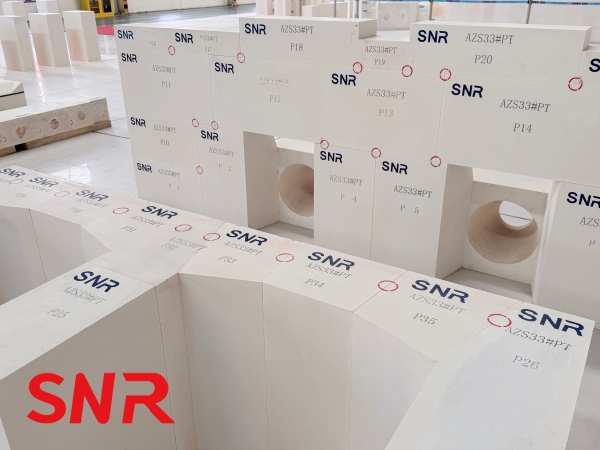
Before furnace heat-up, a comprehensive inspection of the fused cast AZS block masonry must be carried out to ensure that the installation quality is satisfactory. Joints should be filled and dense, expansion gaps properly reserved, and there should be no damage, cracks, or other defects.
The furnace interior must be cleaned to remove debris and residual mortar, ensuring unobstructed conditions inside the furnace. At the same time, all heat-up equipment—such as burners, temperature control systems, and cooling systems—should be inspected to confirm proper operation.
A detailed heat-up plan must be developed, clearly defining the heating stages, temperature ramp rates, holding times, and temperature control requirements. The plan should be formulated based on the properties of the fused cast AZS blocks, furnace structure, and operating parameters to ensure it is scientifically sound and practical.
In addition, the furnace cooling system must be checked to ensure that the layout of air nozzles, airflow volume, and air velocity meet the specified requirements, providing reliable support for both the heat-up process and subsequent furnace operation.
4.2 Core Requirements During Heat-Up
Temperature Ramp Control:
Follow a “slow heating, staged holding” approach:
► Low-temperature stage (room temperature to 300 ℃), 10–15 ℃/h to remove free moisture.
► Medium-temperature stage (300–800 ℃) 15–20 ℃/h for mortar curing.
► High-temperature stage (800 ℃ to operating temperature), 20–30 ℃/h to relieve thermal stress.
► Adjust ramp rates according to brick type and furnace structure.
Hold Time Control:
Ensure sufficient holding time at each stage for moisture evaporation, stress release, and mortar curing: low 24–48 h, medium 48–72 h, high 72–96 h. Monitor blocks regularly; stop heating if cracks or spalling appear, cool down, inspect, rectify, then resume heating.
Temperature Uniformity Control:
Maintain uniform temperature to prevent uneven stress. Adjust burner flame size and distribution, and monitor temperatures at multiple locations. Maximum furnace flame temperature ≤1600 ℃, temperature fluctuation within ±7 ℃.
Cooling System Control:
Control furnace cooling rate to prevent cracking. Gradually adjust airflow and velocity to match the heating rate. Example parameters: sidewall airflow >2700 m³/h·m, exit velocity >35 m/s; throat airflow >7000 m³/h·m, exit velocity >35 m/s. Follow design specifications strictly.
4.3 Post-Heat-Up Inspection and Treatment
After heat-up, allow the furnace to cool slowly to room temperature, then inspect masonry for cracks, spalling, hollows, joint sealing, expansion gaps, and cooling system operation. Minor cracks can be repaired with high-temperature sealants; serious cracks or spalling require removal and reinstallation of qualified blocks. Loose joints or leaks must be re-mortared. After passing inspection, the furnace can enter trial operation, with close monitoring of the refractory masonry. If immediate operation is not possible, protective measures must be taken to prevent moisture or damage to the blocks.
5. Post-Repair Operation and Maintenance Requirements for Fused Cast AZS Blocks in Glass Furnaces
After cold repair of a glass furnace, the post-repair operation and maintenance of fused cast AZS blocks directly affect their service life and the operational stability of the furnace. A comprehensive maintenance system should be established to strengthen daily inspection, maintenance, and management, promptly identify and address issues with the refractory blocks, extend their service life, and ensure long-term stable furnace operation.

5.1 Daily Inspection Requirements
Establish a daily inspection system with trained personnel checking the refractory masonry every day. Key inspection items include:
► Brick surface condition, checking for cracks, spalling, erosion, or wear.
► Joint sealing, ensuring no flame or molten glass leakage.
► Condition of expansion gap fillers, checking for detachment or damage.
► Operation of the cooling system, ensuring no blockage of nozzles and proper airflow and velocity.
Periodic specialized inspections using infrared thermography, ultrasonic testing, and other techniques should assess block thickness, internal structure, and erosion severity, particularly in high-wear areas such as charging ports, bubbling zones, and throats. Keep detailed logs of furnace operating parameters and refractory maintenance records for reference in ongoing operations.
5.2 Daily Maintenance Requirements
Cleaning and Maintenance:
Regularly remove slag, molten glass residues, and other debris from block surfaces to prevent local overheating and accelerated erosion. Clean cooling system nozzles and pipes to ensure unobstructed operation and prevent block damage due to overheating.
Sealing Maintenance:
Repair any loose joints or flame leaks promptly using high-temperature sealing materials or mortar. Replace any damaged or fallen expansion gap fillers to maintain their effectiveness and prevent cracks from thermal fluctuations.
Cooling System Maintenance:
Regularly inspect the cooling system, adjusting airflow and velocity to maintain block temperatures within a safe range. Prevent overheating that accelerates erosion or overcooling that causes cracking. Ensure temporary cooling measures, such as air or water supply lines, are available for emergency use.
5.3 Abnormal Condition Handling
During operation, if cracks, spalling, or accelerated erosion are detected, stop the furnace for inspection, analyze the cause, and implement corrective measures:
Thermal Stress Cracks: Adjust furnace temperatures and ramp rates, and repair cracks.
Molten Glass Erosion Damage: Assess erosion; minor damage can be repaired with patching materials, while severe damage requires prompt brick replacement to prevent further issues.
Cooling System Malfunction: Repair the cooling system immediately to restore normal operation and prevent further block damage.
Additionally, maintain a supply of AZS patch blocks for localized repairs. Optimize furnace operating conditions: except when producing sulfur-carbon-colored brown glass, maintain an oxidizing flame atmosphere with a rigid flame closely aligned with the molten glass surface; maintain slightly positive furnace pressure to avoid negative pressure; implement automatic liquid level control, thin-layer feeding, and accelerated melting to reduce mechanical wear on the refractories, thereby prolonging their service life.
As the core refractory material in glass furnace cold repair, the quality of fused cast AZS blocks directly determines the operational stability, service life, and product quality of the furnace. During cold repair, strict adherence to the principles of “adequate preparation, scientific and rational selection, standardized installation, scientific heat-up and curing, and thorough post-repair maintenance” is essential. From storage and pre-treatment before repair, through selection and masonry installation, to heat-up, curing, and post-repair operation, each step must be carefully controlled, procedures standardized, and key quality points rigorously managed.
For glass furnace cold repair projects, using high-quality fused cast AZS blocks is essential to ensure long-term operational stability and product quality. We highly recommend SNR fused cast AZS blocks, which offer excellent resistance to molten glass corrosion, high-temperature strength, and thermal shock resistance—ideal for critical furnace areas such as tank bottoms, tank walls, charging ports, and throats.
For more technical information or consultation regarding SNR fused cast AZS blocks and their application in glass furnaces, please feel free to contact me:
 Email: [email protected]
WhatsApp:+86 132 2307 9020
