
The glass furnace is the core and critical equipment in the glass manufacturing industry, responsible for the key processes of melting, fining, and homogenizing raw materials. Its operational stability and service life directly determine product quality, production continuity, and the economic performance of the enterprise.
Glass furnaces operate continuously in extremely high-temperature environments exceeding 1500°C, where molten glass and high-temperature flue gases are present. The three core components—electrodes, bubbling systems, and fused cast AZS blocks—are constantly subjected to thermal erosion, melt corrosion, and thermal stress. As a result, they are the fastest-wearing parts and the most prone to failure.
Practical experience shows that the maintenance quality of these three components directly determines the overall service life of the furnace. Improper maintenance can easily lead to issues such as electrode burnout, uneven bubbling, and spalling of fused cast AZS blocks. These problems not only increase maintenance costs but may also cause production interruptions and product rejection.
Based on practical furnace operation and maintenance experience, as well as material science principles, this article provides a detailed breakdown of targeted maintenance strategies for these three key components. The goal is to help glass manufacturers achieve long-term, stable, and efficient furnace operation while reducing overall production costs.
1. Electrode Maintenance: Mitigating High-Temperature Erosion Risks
In glass furnaces—especially electric melting furnaces and all-electric glass furnaces—electrodes serve as the core carriers for electrical energy transmission and thermal energy conversion. They are directly responsible for converting electrical energy into high-temperature heat to melt raw materials such as silica sand and soda ash. Their operating condition has a direct impact on temperature uniformity inside the furnace and the melting quality of the glass melt.
Glass furnace electrodes are continuously immersed in high-temperature molten glass, where they are exposed to temperatures of 1500–1600°C, along with melt corrosion and electrochemical attack. Under such conditions, they are highly susceptible to oxidation, erosion, breakage, and adhesion of molten glass. If not properly controlled, these issues can lead to reduced power transmission efficiency and temperature imbalance within the furnace, resulting in uneven melting and increased bubble formation in the glass. In severe cases, electrode failure may occur, leading to production interruptions.
Electrode maintenance should follow the principles of “proper selection, precise inspection, and standardized operation,” with a focus on the specific operating conditions of glass furnaces and full-process control. The key points are as follows:
1.1 Proper Selection to Build a Solid Maintenance Foundation
The choice of electrode material directly determines its service life. For all-electric furnaces with high power density, molybdenum electrodes or platinum-rhodium alloy electrodes should be preferred. Molybdenum electrodes offer excellent high-temperature strength and electrical conductivity; however, they are prone to oxidation at elevated temperatures and must be fully immersed in the molten glass or used under a protective atmosphere. Platinum-rhodium electrodes exhibit outstanding high-temperature resistance and corrosion resistance, but their high cost makes them more suitable for specialty glass or applications with extremely stringent quality requirements.
For semi-electric furnaces, graphite electrodes can be used, but surface anti-oxidation coatings must be properly applied, and the insertion depth must be strictly controlled to prevent exposure to an oxidizing atmosphere. In addition, electrode diameter should be selected based on current load calculations to ensure that the current density does not exceed the allowable limit of the material (typically 15–25 A/cm² for molybdenum electrodes), thereby avoiding local overheating and erosion caused by electrical overloading.
1.2 Precise Inspection to Identify Risks in Time
A combined system of daily inspections and periodic in-depth checks should be established. Routine inspections should focus on the electrode surface condition, including signs of erosion pits, cracks, or adhesion of molten glass. For minor glass adhesion, cleaning should be carried out gently with specialized tools during furnace holding conditions, avoiding forceful impact that may damage the electrodes.
Weekly inspections should include checking electrical connections, with particular attention to loose joints or terminals, abnormal heating, and aging or failure of sealing components. Any issues identified should be promptly addressed or replaced. Every month, infrared thermometers should be used to monitor the temperature of electrode roots and connecting copper busbars. Under normal conditions, the electrode root temperature should remain below 200°C. If an abnormal local temperature rise is detected, immediate investigation is required to identify causes such as increased contact resistance or insufficient cooling.
At the same time, an electrode operation log should be established to record current, voltage, temperature data, and maintenance activities from each inspection. This enables trend analysis and early prediction of potential failures.
1.3 Standardized Operation and Maintenance to Reduce Wear and Extend Service Life
The start-up and shutdown phases are the most critical periods for electrode damage. During heating, the temperature rise rate must be strictly controlled, typically at 50–80°C per hour, to avoid cracking caused by sudden thermal stress. Similarly, during cooling, the rate should not exceed 60°C per hour while maintaining uniform temperature distribution within the furnace.
During normal operation, electrode surface cleaning can be scheduled quarterly. Specialized scrapers or ultrasonic vibration tools can be used to remove adhered materials and restore the effective working area of the electrodes.
Particular attention must be paid during shutdown maintenance: for molybdenum and platinum-rhodium electrodes, inert gases such as nitrogen or argon must be introduced immediately after shutdown to prevent oxidation at high temperatures when exposed to air. For electrodes that will be out of service for an extended period, they should be removed, thoroughly cleaned, coated with anti-oxidation material, dried, and stored on dedicated racks to prevent moisture absorption or mechanical damage.
Supplementary note: In practice, the electrode wear rate is closely related to the glass composition. For high-alkali glass production, molybdenum–niobium alloy electrodes with higher resistance to electrochemical corrosion should be prioritized. For fluorine-containing glass, special surface coatings are required for the electrodes to prevent fluoride ions from accelerating electrode erosion.
In addition, the electrode insertion depth must be dynamically matched with the level of the glass melt. When the level fluctuates, timely adjustments should be made to prevent the electrodes from being exposed to air and oxidizing, or from being inserted too deeply and causing local overheating, thereby further reducing the risk of wear.

2. Bubbling System Maintenance: Optimizing Molten Glass Conditions
The bubbling system is a core auxiliary system in glass furnaces. Its primary function is to inject inert gases (such as nitrogen or argon) into the bottom of the furnace to stir the molten glass, promoting thorough melting and homogeneous mixing of raw materials, removing bubbles and impurities, and improving the transparency and uniformity of the final glass product.
Operating under harsh conditions of high temperature, high pressure, and molten glass corrosion, components such as bubbling pipes, bubble blocks, pipelines, and valves are in direct contact with molten glass above 1500°C. These parts are highly susceptible to blockage, erosion, leakage, and damage. Improper maintenance not only reduces the effectiveness of glass stirring—leading to increased bubbles and substandard product quality—but may also cause furnace pressure fluctuations due to gas leakage or pipeline blockage, indirectly shortening the overall service life of the furnace.
Maintenance of the bubbling system should focus on three key objectives: unobstructed flow, tight sealing, and corrosion resistance. The detailed strategies are as follows:
2.1 Ensuring Pipeline Integrity for Stable Gas Transmission
Pipeline blockage is the most common failure in bubbling systems. It is recommended to perform reverse purging with high-pressure inert gas once every quarter. The purging pressure should be controlled at 0.6–0.8 MPa, with a duration of 5–10 minutes, effectively removing dust, impurities, and coke deposits formed under high temperatures inside the pipeline.
The purging frequency can be adjusted based on gas purity and operating conditions. For high-purity nitrogen (above 99.99%), the interval may be extended to once every six months. If gas purity is lower or furnace dust levels are high, the frequency should be increased to once per month.

Pipeline sealing inspection is equally critical. Each month, all joints, elbows, and flange connections should be checked using soapy water or specialized leak detection instruments. Minor leaks should be tightened promptly, while significant leaks require immediate shutdown for repair to prevent high-temperature gas intrusion into the furnace, which may cause safety hazards.
The insulation layer of pipelines should be inspected every six months, focusing on whether the insulation material has fallen off or absorbed moisture. Damaged areas should be repaired in time to prevent thermal stress cracking caused by uneven local temperatures.
2.2 Maintaining Bubbling Components to Ensure Effective Stirring
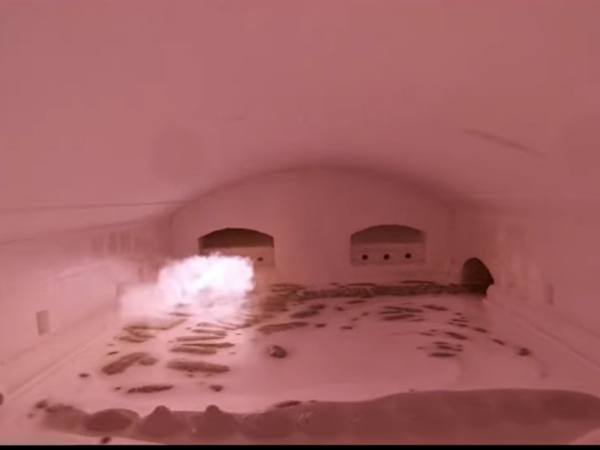
Bubbling pipes and bubble blocks are in direct contact with molten glass, and their condition directly affects bubbling performance. Monthly inspections should be conducted through observation ports or industrial endoscopes to check for deformation, damage, or severe glass adhesion on bubbling pipes.
For minor adhesion, cleaning can be performed during furnace holding conditions using specialized tools. Severely deformed or damaged components should be replaced immediately. Bubble blocks (typically made of alumina or zirconia materials) should be inspected quarterly, focusing on erosion pits, through-cracks, and pore blockage.
If pores are blocked, they can be carefully cleared with fine steel wires or specialized tools after shutdown. If the erosion depth exceeds one-third of the brick thickness, full replacement is recommended.
Optimization of bubbling parameters is also essential. Gas pressure is typically controlled at 0.2–0.4 MPa, and flow rate is determined based on furnace size (generally 0.5–1.5 Nm³/h per square meter of furnace bottom area). Gas purity requirements are ≥99.5% for nitrogen and ≥99.9% for argon. These parameters should be dynamically adjusted according to glass type and melting temperature to avoid excessive pressure (causing large bubbles and uneven stirring) or insufficient pressure (leading to poor mixing and stagnant molten glass zones).
2.3 Maintaining Auxiliary Equipment to Strengthen System Support
Air compressors serve as the power source of the bubbling system. Daily checks should include monitoring for abnormal noise, overheating, and ensuring oil levels remain within the normal range. Air filter elements should be cleaned monthly, and high-temperature lubricating oil should be replaced quarterly to ensure reliable operation.
Pressure regulators and flow meters should be disassembled, cleaned, and recalibrated every six months to ensure accurate readings. For valves, it is recommended to use high-temperature-resistant (above 200°C) and corrosion-resistant stainless steel bellows valves or ball valves, as conventional valves tend to fail quickly under high-temperature conditions.
Anti-corrosion, dust-proof, and heat-resistant treatments for auxiliary equipment are equally important. Equipment installed outdoors should be protected from rain and sun exposure, while pipelines in high-temperature areas should be wrapped with heat-resistant insulation materials to extend the overall service life of the system.
Supplementary note: In actual operation and maintenance, a precision filter (filtration accuracy ≤ 1 μm) can be installed at the front end of the bubbling gas pipeline to further reduce the entry of impurities into the pipeline and bubbling elements, thereby lowering the risk of blockage. For large-scale glass furnaces, it is recommended to adopt zoned bubbling control. Based on the condition of the molten glass in different furnace areas, the bubbling pressure and flow rate in each zone can be adjusted accordingly. This not only improves the homogeneity of mixing but also prevents localized excessive bubbling that may lead to accelerated component wear.
In addition, the bubbling gas can adopt a “nitrogen + argon” mixed mode. While ensuring effective stirring performance, this approach reduces argon consumption and helps control operating and maintenance costs.
3. Fused Cast AZS Blocks Maintenance: Resisting High-Temperature Erosion and Corrosion
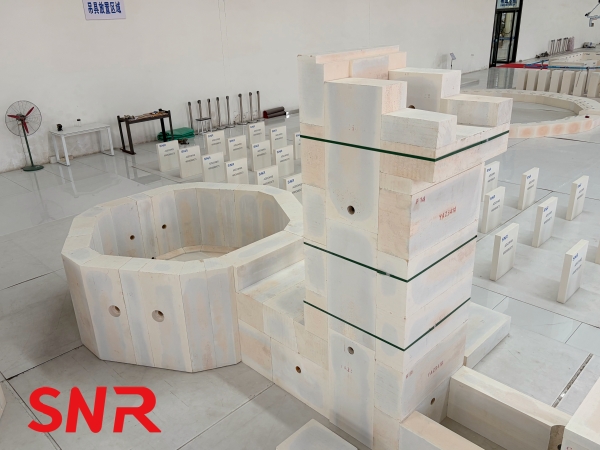
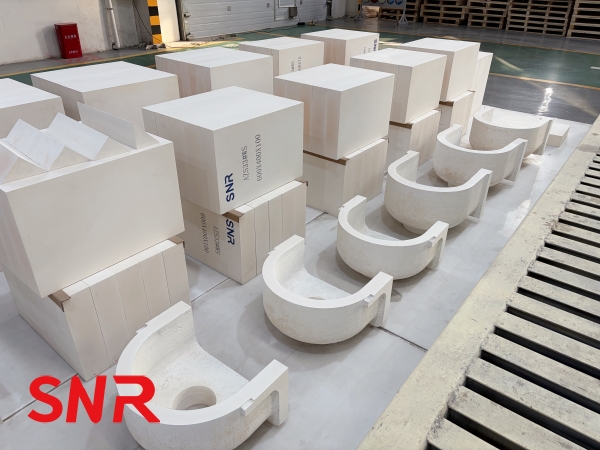
Fused cast AZS blocks—such as fused zirconia-alumina bricks, fused alumina bricks, and fused α-β alumina bricks—are the core lining materials of glass furnaces. They cover critical areas including furnace walls, crown, bottom, throat, and doghouse. Acting as a “protective shield” for the furnace, they play a vital role in withstanding high temperatures, insulating heat, protecting the furnace shell, and resisting erosion from molten glass and high-temperature flue gases.
The furnace lining operates under harsh conditions, including temperatures above 1500°C, molten glass erosion, flue gas corrosion, and alkaline vapor attack. Fused cast AZS blocks are prone to wear such as erosion, spalling, cracking, loosening, powdering, and glass phase infiltration. If not properly maintained, these issues can lead to overheating, deformation, or damage to the furnace shell, and in severe cases, may cause leaks or collapse—posing serious safety hazards. Improper maintenance can also result in contamination of the glass melt (e.g., zircon defects, streaks), directly affecting product quality.
Maintenance of fused cast AZS blocks should follow the principles of “high-quality material selection, standardized installation, daily protection, and timely repair.” It requires a deep understanding of wear mechanisms and the implementation of targeted measures. The key points are as follows:
3.1 Targeted Material Selection and Installation, Laying a Solid Protective Foundation:
The wear of fused cast AZS blocks is not caused by a single mechanism but results from multiple interacting factors:
►Molten glass erosion: In areas with high glass flow velocity, such as throats and doghouses, the liquid continuously scours the block surface, gradually removing glass phases from the block and forming rough surfaces and pits.
►Interfacial chemical erosion: Alkaline components in the glass melt (Na₂O, K₂O) react with alumina and zirconia in the blocks, producing low-melting compounds that reduce the refractory’s fire resistance and accelerate erosion.
►Thermal stress fatigue: Furnace start-up/shutdown and temperature fluctuations generate cyclic thermal stresses inside the blocks, causing microcrack propagation and eventually leading to spalling.
►Gas-phase corrosion: Alkaline vapors, boron vapors, and other components in high-temperature flue gas penetrate the block pores, react with the block constituents, and cause internal loosening, powdering, or structural degradation.
3.1.1 Targeted Material Selection Strategy
Based on these wear mechanisms, the selection of fused cast AZS blocks must carefully match furnace zones:
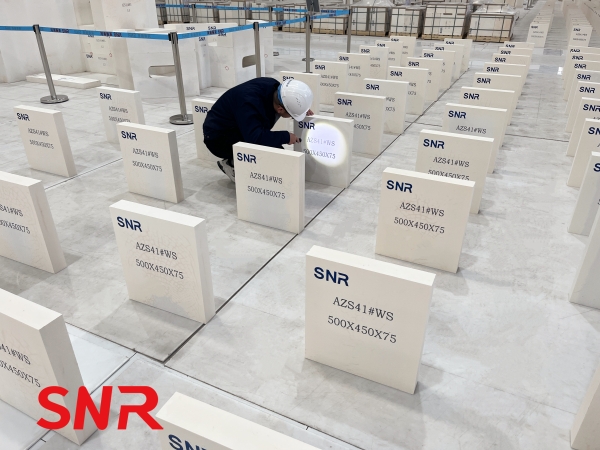
►Melting zone walls and throats: Direct contact with high-velocity molten glass requires high-resistance fused zirconia-alumina blocks (AZS). The higher the zirconia content (e.g., 33#, 36#, 41#), the stronger the resistance to glass erosion. 41# blocks offer the best corrosion resistance and are ideal for the most demanding areas.
►Fining and working zones: With relatively stable glass melt, fused α-β alumina blocks can be used; they are dense, resistant to corrosion, and do not contaminate the glass.
►Upper structures (chest walls, crown): Exposed to high-temperature flue gases and alkaline vapors, these areas require blocks with excellent thermal shock resistance and high-temperature strength, such as fused α-alumina or AZS blocks.
►Paving blocks: Subjected to static pressure from the molten glass, blocks must resist erosion and penetration; options include AZS blocks or dense zircon-silica blocks.
►Doghouse corners: Areas exposed to abrasive feed and sudden temperature changes require high thermal shock-resistant fused cast AZS blocks, ideally in large blocks to reduce joint numbers.
3.1.2 Standardized Installation Practices
After material selection, the quality of installation (bricklaying/masonry) is the second critical factor determining the service life of fused cast AZS blocks
►Joint control: Blocks must be laid in a staggered pattern to avoid continuous joints. Joint width should be strictly controlled at 1–2 mm and filled with zircon-based ramming material or specialized fire clay to ensure integrity. Too wide joints allow glass infiltration, too narrow joints create stress concentration after thermal expansion.
►Expansion joints: According to furnace structure and block thermal expansion coefficients, expansion joints should be reserved every 1.5–2 m along the lining, typically 0.8–1.2% of the block length, filled with elastic materials such as ceramic fiber blankets to absorb thermal expansion and prevent cracking.
►Pre-treatment of blocks: All blocks must be cleaned (removing dust and grease) and pre-assembled (checking dimensional deviations and layout) before installation. Where possible, high-temperature preheating (e.g., 300–400°C for 24 h) can remove absorbed moisture to prevent explosive cracking during heating.
►Reinforcement of key zones: Stress-concentrated areas like throats, doghouses, and electrode holes should use composite block structures or embedded metal supports to enhance structural stability.
3.2 Daily Fine Protection to Proactively Delay Wear
After the furnace is put into operation, meticulous protection during daily operation is the key to extending the service life of fused cast AZS blocks.
Strict control of thermal regime: The heating and cooling ramp rates must be strictly followed. During the heating period, the temperature rise should be controlled at 50–70°C/h; during the cooling period, it should be ≤50°C/h to avoid thermal shock-induced cracking caused by rapid temperature fluctuations. During normal operation, furnace temperature should be kept as stable as possible, with fluctuations controlled within ±5°C.
Optimization of combustion and batch charging: Adjust the flame length and angle of the burners to prevent direct flame impingement on the surface of fused cast AZS blocks. Control the moisture content and particle size of the batch materials to reduce dust generation, and avoid dust from melting and adhering to the brick surface in high-temperature zones to form “material deposits,” which can intensify localized corrosion. Maintain stable glass melt level, with fluctuations controlled within ±0.5 mm, to reduce erosion bands on the sidewall blocks caused by level variations.
Furnace sealing and insulation maintenance: Regularly inspect the sealing conditions of all furnace components, with particular attention to observation ports, temperature measurement ports, and doghouses. Check whether sealing bricks or sealing structures are intact, and repair sealing materials in a timely manner to prevent cold air infiltration that may accelerate oxidation of the bricks, or hot flue gas leakage that may damage steel structures. Regularly monitor the outer shell temperature of the furnace; if local overheating is detected (exceeding design values), it indicates that the internal lining has thinned or the insulation layer is damaged. In such cases, the insulation layer should be repaired promptly or external cooling measures should be applied.
Regular removal of deposits inside the furnace: On a monthly basis, use observation ports or dedicated tools to inspect and remove deposits, slag buildup, and crusts on furnace walls, throat areas, and outlets. During cleaning, wooden or copper tools must be used, and operations should be gentle to avoid impact or scratching of the electrofused brick surface. After cleaning, the condition of the exposed brick areas must be carefully inspected for abnormal corrosion or cracks.
3.3 Scientific Diagnosis and Timely, Precise Repairs
Even with proper daily maintenance, electrofused bricks will still gradually deteriorate. The key lies in timely detection, accurate assessment, and the implementation of appropriate repair measures.
3.3.1 Integrated inspection system
►Manual daily inspection: Using observation ports and industrial endoscopes, conduct visual inspections of key areas at least once per week. Record whether there are any abnormalities such as obvious corrosion pits, spalling, cracks, or glass melt seepage on the brick surface.
►Regular infrared thermal imaging diagnosis: Perform a full-furnace infrared thermal imaging scan every quarter. By analyzing the temperature distribution on the outer shell of the furnace, the erosion condition of the internal lining bricks can be inferred. If a certain area shows abnormally high external wall temperature with a patchy distribution, it often indicates severe thinning of the electrofused bricks in that region. By comparing historical thermal imaging data, the erosion rate can be quantified and the remaining service life can be predicted.
►Periodic laser scanning for thickness measurement: Once every one to two years, during cold repair or hot repair shutdowns, a laser 3D scanner should be used to scan key internal areas of the furnace. The results are then compared with the original construction drawings to accurately calculate the residual brick thickness, providing data support for repair or replacement decisions.
3.3.2 Graded Repair Strategies
►Level I (minor wear): Surface erosion <5 mm or microcracks <1 mm. Use high-alumina or zircon-based thermal spray material applied in 2–3 mm layers at >1000°C, cleaning loose material before application.
►Level II (moderate wear): Erosion 5–15 mm, cracks 1–3 mm, or small spalling. Use ceramic welding technology, fusing repair material with the base block to form a metallurgical bond with high strength and corrosion resistance. Suitable for critical areas like flow channels or electrode holes.
►Level III (severe wear): Erosion >15 mm, through-cracks, large spalling, or significant loosening. Partial replacement is required. Remove damaged blocks, clean interfaces, apply specialized fire clay, compress joints ≤1.5 mm, and fill fully. Post-installation, follow controlled heating curves to bring new bricks to operating temperature.
Regular Reinforcement of Critical Areas: Annual inspection of high-stress zones such as throats and furnace crown. Minor loosening can be reinforced with metal anchors and castable material; severe loosening requires brick replacement.
Establish a Full Life-cycle Block Archive: Document block inspection upon receipt, installation records, routine inspections, infrared scans, repair records, and eventual replacement. Analyzing this data reveals wear patterns, optimizing material selection and maintenance strategies, and shifting from reactive maintenance to proactive prevention. For example, if a certain area erodes faster than others, thermal management or flow patterns should be investigated and optimized rather than merely replacing bricks.
Supplementary note: In practice, the wear of fused cast AZS blocks is also directly related to the corrosiveness of the molten glass. When producing high-alkali, high-boron, or fluorine-containing glass, the block grade should be upgraded accordingly. For example, in the throat area, fused cast AZS 41 blocks can be selected and the brick thickness can be increased. For stress-concentrated areas such as furnace corners and electrode openings, a composite protection structure of “brick + castable refractory” can be adopted to further enhance resistance to wear.
In addition, repaired areas should be subject to more frequent inspections. An additional focused inspection should be carried out every week to ensure the effectiveness of the repair work and to prevent secondary damage.
4. Conclusion
Extending the service life of a glass furnace is a systematic and long-term task, with its success hinging on the scientific maintenance and precise management of three critical components: electrodes, the bubbling system, and fused cast AZS blocks. These components are interdependent, and the absence or neglect of any one can compromise furnace performance.
Electrodes, as the “energy hub” of the glass furnace, require proper material selection, routine inspections, and standardized operation to prevent high-temperature erosion and ensure a stable heat supply.
The bubbling system, acting as the “optimization core” of molten glass conditions, must maintain clear gas lines, intact components, and reliable auxiliary equipment to improve glass melt stirring while minimizing erosion and wear.
Fused cast AZS blocks, the furnace’s “protective shield,” require a deep understanding of wear mechanisms, rigorous material selection and installation, diligent daily protection, and timely repairs. Through scientific diagnostics and graded repair strategies, they effectively resist high temperatures, molten glass, and flue gas erosion, safeguarding furnace integrity.

Glass manufacturers should tailor maintenance programs to their furnace types, glass varieties, and operational conditions. Establishing a systematic, standardized, and refined maintenance regime ensures that these three key components are regularly monitored and managed under the principles of prevention first, combined prevention and treatment, data-driven decision-making, and safety as the top priority. At the same time, strengthening the professional training of maintenance personnel is crucial, enabling them to understand the unique operating conditions of glass furnaces and master advanced maintenance techniques such as infrared thermography, laser thickness measurement, and thermal spray repair to detect and resolve potential issues promptly. Only through such a comprehensive approach can companies reduce maintenance costs, minimize production interruptions, extend furnace service life, and achieve long-term, stable, and efficient furnace operation—improving glass product quality while lowering production costs and supporting sustainable business growth.
Technical Support from SNR Refractory
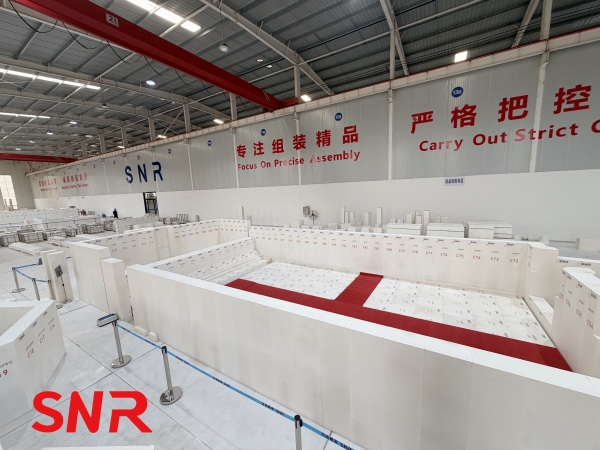
At Henan SNR Refractory Co., Ltd., we specialize in high-quality fused cast AZS blocks for demanding glass furnace environments.
Our products offer:
Stable material performance
Strict quality control
Proven experience with glass manufacturers worldwide
If you are looking for suitable fused cast AZS blocks or need technical support for your glass furnace project, feel free to contact us.
 Email:[email protected]
Website:www.snrefractory.com
