
Critical areas of a glass furnace—including the Doghouse, Throat, furnace bottom, melting tank walls, and furnace corners—serve as the core hubs that sustain continuous glass production. The service condition of these zones directly determines the overall furnace lifespan, production efficiency, and product quality stability. These areas operate under extremely complex and harsh conditions year-round: they must withstand prolonged exposure to temperatures of 1500–1700 °C, resist chemical attack from alkali oxides in the molten glass and high-temperature steam, endure mechanical wear from high-velocity flame impingement and material impact, and cope with stress concentrations induced by complex structural geometries. The combination of these severe factors makes them the most failure-prone weak points of the furnace. Fused cast AZS blocks, with their unique material composition and manufacturing process, can address failure challenges at each location, making them the key refractory materials for extending the service life of critical areas and ensuring stable production.
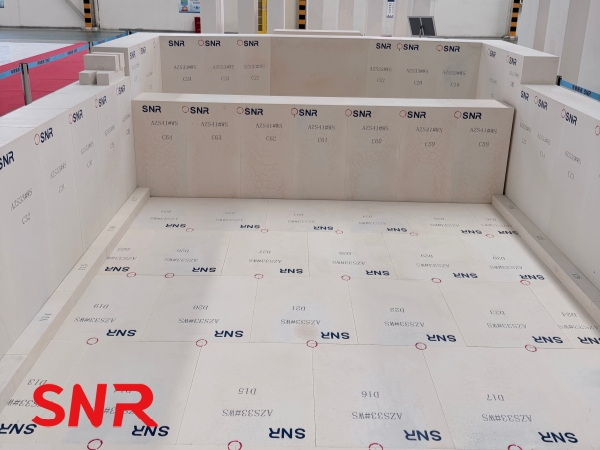
I. Challenges Faced by Critical Furnace Zones
(A) High-Temperature Thermal Shock Damage
During furnace start-up and shutdown, production load adjustments, and local temperature fluctuations, the refractory blocks in critical zones must rapidly endure alternating hot and cold conditions, creating significant temperature gradients and inducing cyclic thermal stress. The Doghouse is particularly affected, experiencing dual thermal influence from low-temperature feed materials and high-temperature furnace radiation. Temperature fluctuations here are the most severe, with differences reaching several hundred degrees Celsius, making the blocks prone to microcracking and rapid crack propagation. The Throat, as the key passage for molten glass flow, is exposed on one side to high-temperature glass from the melting zone and on the other to the working tank, resulting in uneven temperature distribution and pronounced thermal stress concentration. While the furnace bottom maintains relatively stable temperatures, start-up and shutdown cycles can create vertical temperature differences between layers, resulting in an internal stress imbalance within the blocks. Over time, repeated thermal stress gradually propagates microcracks, causing spalling and breakage, which compromises structural integrity and provides pathways for chemical corrosion and mechanical wear, ultimately accelerating localized failure.
(B) Corrosion by Molten Glass and Steam
Alkali metal oxides (such as Na₂O and K₂O) in high-temperature molten glass, together with impurities in the raw materials, react aggressively with the refractory surface to form low-melting eutectics (typically below 1200 °C). This leads to surface softening and dissolution, progressively penetrating the brick and forming an erosion layer. The degree of corrosion varies across different critical zones: the Throat, in direct contact with high-velocity molten glass, suffers the most severe attack, with erosion occurring both longitudinally and laterally due to flow and splashing; the furnace bottom, in prolonged contact with molten glass, experiences "pitting erosion" as metallic impurities react with brick components, accelerating brick degradation; the melting tank walls are influenced by the surface tension of molten glass, leading to ring-shaped erosion near the liquid level; the Doghouse is subject to combined corrosion from high-temperature steam and acidic components in the feed materials, gradually reducing surface density. Additionally, high-temperature steam within the furnace penetrates brick porosity, reacting with internal components to produce spallable compounds, further weakening brick strength and chemical resistance.
(C) Flame Impingement and Mechanical Wear
High-temperature flames in the furnace (often exceeding 1800 °C) flow at high velocities, directly impacting the brick surfaces and causing continuous thermal shock and physical abrasion. The melting tank walls and furnace corners are most affected by direct flame impingement, resulting in local material loss, thinning, and formation of pits. The Doghouse endures repeated impact from falling feed materials, especially coarse chunks, leading to corner damage and spalling, with dust introduced during feeding further accelerating surface wear. The furnace bottom experiences uniform wear due to the shear force of flowing molten glass; if metallic impurities are present, localized high-intensity wear points develop, accelerating pitting erosion. The Throat, exposed to rapid molten glass flow, undergoes continuous wall abrasion, with the degree of wear increasing along the flow direction. Over time, these wear processes reduce brick thickness and structural strength, potentially causing leakage, unscheduled shutdowns, and other safety hazards.

(D) Structural Stress Concentration
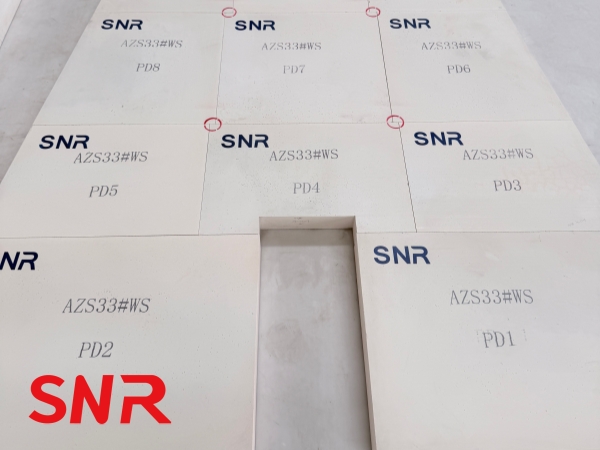
Critical zones such as the Throat, furnace corners, and the connection between the Doghouse and furnace body feature complex geometries and challenging brickwork, making them prone to structural weaknesses. The Throat is a narrow, elongated passage where blocks on both sides bear pressure from molten glass, leading to lateral stress concentration. Furnace corners involve special brick joint angles; during high-temperature expansion, uneven directional expansion generates corner stresses. The Doghouse-furnace junction, with abrupt structural changes, experiences uneven load transfer and localized stress superposition. Under the combined influences of thermal expansion, molten glass pressure, mechanical forces, and thermal stress, these zones are highly susceptible to microcrack initiation and propagation. Material strength deteriorates rapidly, leading to spalling and fracture, with wear rates typically 30%–50% faster than adjacent flat areas, substantially shortening the overall service life of the zone.
II. Core Advantages of Fused cast AZS blocks
(A) Excellent High-Temperature Performance
Fused cast AZS blocks are formed through high-temperature molten casting, with core compositions varying by type, including zircon, alumina, and zircon-alumina. High-zirconium fused-cast zircon-alumina blocks (AZS series) exhibit outstanding high-temperature performance, enabling long-term stable operation under extreme furnace conditions without softening or melting. Fused cast AZS blocks can be precisely matched to the temperature requirements of different critical zones: for the highest-temperature areas, such as the melting tank walls and Throat, AZS-41 series blocks are used, offering excellent high-temperature structural stability; for regions with significant temperature fluctuations, such as the Doghouse and furnace corners, AZS-36 series blocks provide a balance of high-temperature resistance and thermal shock resistance; for the relatively stable furnace bottom, AZS-33 series blocks are suitable, balancing performance and cost-effectiveness. Compared with conventional refractory blocks, fused cast AZS blocks offer superior high-temperature volumetric stability, effectively preventing structural deformation and providing reliable support for all critical areas.
(B) Low Thermal Expansion and Superior Thermal Shock Resistance
Fused cast AZS blocks are processed using specialized techniques such as vacuum melting and directional solidification, resulting in a significantly lower thermal expansion coefficient than ordinary refractory blocks. This minimizes volumetric changes during rapid temperature fluctuations, effectively alleviating internal thermal stress and reducing the formation of thermal cracks. Fused cast AZS blocks exhibit differentiated adaptability to the thermal shock characteristics of various critical zones: the Doghouse, experiencing the most severe temperature fluctuations, uses AZS blocks produced by inclined casting, with densely arranged internal crystals, offering excellent thermal shock resistance capable of withstanding multiple hot–cold cycles without spalling or cracking; the Throat and furnace corners, where thermal shock combines with structural stress, use SNR series fused cast AZS blocks with low thermal expansion, which can offset part of the thermal stress and prevent crack initiation; although the furnace bottom experiences less thermal shock, its low thermal expansion reduces differential expansion with upper layers, preventing interface delamination and accommodating start-up, shutdown, and load-adjustment conditions.
(C) High Chemical Corrosion Resistance
The high chemical corrosion resistance of fused cast AZS blocks derives from their dense microstructure and high-quality composition. AZS series zircon-alumina blocks, with low glass phase content and low porosity, effectively resist penetration and erosion by molten glass and alkali metal vapors, providing targeted protection for critical zones. In areas directly exposed to molten glass, such as the Throat and furnace bottom, the surface of AZS blocks reacts with molten glass to form a dense zircon layer, effectively inhibiting ongoing reactions between alkali oxides and the brick interior, significantly reducing erosion rates. On melting tank walls, AZS blocks block lateral erosion along the liquid surface, preventing rapid expansion of ring-shaped erosion bands. The Doghouse, subject to high-temperature steam and acidic feed components, benefits from high-alumina fused cast AZS blocks forming a stable oxide layer to resist corrosion. For gaps at furnace corners, matching-phase fused-cast patching materials prevent the formation of penetration channels due to corrosion, ensuring comprehensive protection.

(D) Strong Dimensional and Structural Stability
During manufacturing, fused cast AZS blocks are cast in precision molds, ensuring high dimensional accuracy. Once installed, they strictly maintain the designed geometric shape of critical zones, effectively preventing local stress concentration caused by dimensional deviations and meeting the demands of complex structures. Dimensional and structural stability plays a critical role in various zones: in the Throat, a narrow elongated passage, precise brick dimensions ensure smooth inner walls, preventing localized flow disruption and stress concentration; at furnace corners, custom-angle blocks allow seamless joints, avoiding stress superposition and corrosion at the seams; the Doghouse withstands repeated feed impacts, and high strength and density maintain structural integrity over long service periods; furnace bottom blocks form a flat load-bearing surface, evenly distributing molten glass pressure and preventing localized breakage.
(E) Outstanding Long-Term Stability
Compared with ordinary refractory blocks, fused cast AZS blocks demonstrate superior long-term stability under combined conditions of high temperature, corrosion, abrasion, and stress. Their service life is typically 2–3 times that of conventional blocks, significantly reducing downtime and material replacement costs. The long-term stability of fused cast AZS blocks varies by critical zone: in the Throat, AZS-41 series blocks withstand the combined effects of high-temperature molten glass erosion and corrosion, achieving service life far beyond conventional blocks; the furnace bottom uses a combination of AZS and zircon blocks to resist prolonged corrosion from molten glass and metallic impurities, ensuring extended service periods; the Doghouse employs spall-resistant fused cast AZS blocks that maintain long-term performance under thermal shock, impact, and chemical attack, reducing the need for frequent shutdowns; melting tank walls use a gradient arrangement of fused cast AZS blocks, substantially extending overall service life. This stability stems from the durable crystalline structure of fused cast AZS blocks, providing reliable support for continuous furnace operation.
III. Application Strategies for Extending the Service Life of Critical Furnace Zones
(A) Precise Design and Installation to Match Zone Conditions
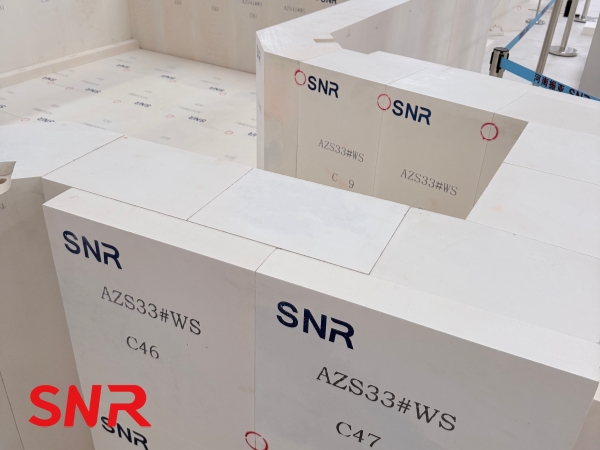
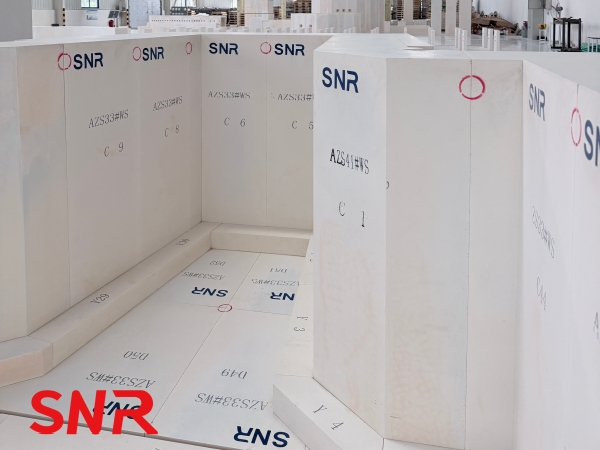
Precise design and installation form the foundation for unleashing the full potential of fused cast AZS blocks. Selection of brick type, grade, and installation method must be tailored to the temperature distribution, erosion intensity, stress characteristics, and wear patterns of each critical zone, achieving a "one-zone, one-solution" approach. In the Throat, a core erosion-prone area, high-zircon AZS-41 fused cast AZS blocks are installed using a vertical laying method, with strict control of brick joints. Joint gaps are filled with AZS castable, sintered in place to form a sealed monolithic structure, preventing molten glass penetration. The furnace bottom employs a "three-layer composite installation" design: the top layer uses AZS-36 facing blocks, the middle layer a phase-matched AZS sealing layer, and the bottom layer zircon blocks, all bonded with specialized adhesives. This configuration resists upward penetration of molten glass and blocks downward infiltration of metallic impurities. The Doghouse uses sloped-cast, spall-resistant fused cast AZS blocks installed with a staggered joint method, with reinforced corner blocks to enhance impact resistance. The melting tank walls are laid in zones according to liquid level: the core liquid-level area uses AZS-41 blocks, while the remaining areas use AZS-36 blocks, with precise flatness control to prevent stress concentration. Furnace corners employ custom-angle SNR series blocks to achieve seamless joints and reduce stress accumulation.
(B) Zonal Combination and Gradient Arrangement for Optimal Protection
A strategy of zonal combination and gradient arrangement maximizes the protective effectiveness of high-performance fused cast AZS blocks while controlling material costs, providing comprehensive protection for all critical zones. In high-temperature, high-corrosion core areas, premium blocks form the first line of defense: the Throat is fully lined with AZS-41 blocks, with an additional high-temperature protective coating on the inner wall to enhance erosion resistance; the furnace bottom uses AZS-36 surface blocks, with key areas (e.g., near the molten glass outlet) upgraded to AZS-41 to strengthen local protection; the core liquid-level zone of melting tank walls uses AZS-41, forming a circular protective band. In peripheral areas with lower temperatures and weaker corrosion, standard-grade fused cast AZS blocks are used to reduce costs: the furnace bottom's lower layer uses zircon blocks, the exterior of the Doghouse uses high-alumina fused cast AZS blocks, and non-flame-exposed regions of the furnace body use AZS-33 blocks. At interfaces between different grades, phase-matched transition materials are applied to optimize thermal expansion compatibility and prevent cracking. This forms a composite protection system of "strong core defense with stable peripheral support," balancing protection and cost-efficiency.
(C) Regular Inspection and Maintenance for Risk Prediction
A full-cycle inspection and maintenance program is established, employing differentiated monitoring and maintenance strategies based on the failure risks of each critical zone. This ensures a timely understanding of brick service conditions and prevents minor damage from developing into extensive failure. The Throat is monitored with in-furnace cameras and infrared thermography, with periodic records of wall wear and temperature distribution; offline inspections evaluate brick thickness, and heavily worn areas are repaired locally with AZS patching material. The furnace bottom is monitored via embedded sensors to track stress conditions, with surface erosion regularly checked, and "pitting erosion" sites filled with specialized repair material to block further penetration. The Doghouse undergoes daily inspection for corner damage and monthly infrared imaging to detect internal cracks; minor spalling is reinforced with impact-resistant patching material. Melting tank walls are periodically checked for changes in liquid-level erosion bands, with locally damaged blocks replaced using a staggered-laying repair technique. Furnace corners are closely monitored for crack development at stress-concentrated zones, with gaps sealed to prevent corrosion penetration. Precise maintenance of this nature significantly extends fused cast AZS block service life.
(D) Optimizing Thermal Flow and Operating Conditions to Reduce Wear
Optimizing thermal flow and operating conditions reduces erosion and thermal stress at the source while further enhancing protection when combined with advanced fused cast AZS block technology. For thermal flow optimization, burner angles and positions are adjusted to prevent direct flame impingement on the melting tank walls and furnace corners, reducing erosion intensity. Flow-guiding devices optimize molten glass flow velocity in the Throat, preventing localized high-speed wear. Buffering devices at the Doghouse reduce the impact of falling feed materials on blocks. In terms of operating conditions, furnace start-up and shutdown rates are strictly controlled to minimize temperature fluctuations; molten glass composition is optimized to reduce alkali oxide content and corrosion intensity; magnetic separators remove metallic impurities from the batch, mitigating the risk of pitting erosion at the furnace bottom.
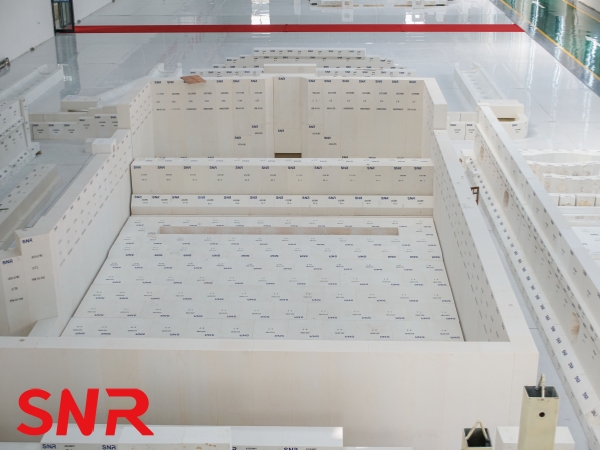
Advanced technology applications further enhance protection: microcrystalline fused cast AZS blocks are used in the Throat, furnace bottom, and other core areas, providing denser structure with superior corrosion and abrasion resistance; the Doghouse and furnace corners employ high-alumina fused cast AZS blocks reinforced with carbon-fiber composite materials for improved thermal shock and impact resistance; melting tank walls use gradient-functional fused cast AZS blocks to optimize thermal stress distribution, further extending service life.
IV. Conclusion
Fused cast AZS blocks, with their core advantages of high-temperature resistance, chemical corrosion resistance, low thermal expansion, structural stability, and long-term service life, have become the key materials for solving failure issues in critical glass furnace zones, including the Doghouse, Throat, and furnace bottom. In particular, high-quality SNR series and AZS series fused cast AZS blocks can be precisely matched to the complex operating conditions of each zone, providing reliable support for extending service life.
From precise brick selection for each zone to gradient arrangement, full-cycle monitoring and maintenance, operational optimization, and integration of advanced fused cast AZS block technologies, a series of scientific strategies can maximize the protective effectiveness of fused cast AZS blocks. This approach effectively counters multiple challenges, including high-temperature thermal shock, chemical corrosion, flame impingement, and structural stress concentration, significantly extending the service life of critical zones.
For glass manufacturers, the scientific application of fused cast AZS blocks and detailed protection plans for each zone not only reduces maintenance and downtime losses caused by localized failures but also ensures continuous production, enhances product quality stability, and ultimately achieves cost reduction and efficiency improvement. This provides strong support for the glass industry's move toward high-efficiency, green, and high-quality development. Looking ahead, with continuous advancements in fused cast AZS block technology, their protective performance in critical furnace zones will be further enhanced, offering even more solid support for the sustainable development of the glass industry.
Contact Us
Whether you are building a new furnace or extending the life of an existing one, SNR can provide the right AZS solution for your needs.
Contact us to discuss your project.
 Email: [email protected]
WhatsApp:+86 132 2307 9020
