
Introduction: AZS Cracking Is a Furnace System Behavior, Not a Material Defect
Fused cast AZS blocks are one of the most important refractory materials used in modern glass furnace construction. Due to their unique microstructure formed during the fusion casting process, fused cast AZS blocks offer excellent resistance to molten glass corrosion, high-temperature stability, and structural integrity under continuous furnace operation.
These materials are widely used in critical furnace zones such as sidewalls, throat sections, doghouse areas, bubbling zones, bottom structures, and working ends. In float glass furnaces, container glass furnaces, and special glass production lines, fused cast AZS blocks are considered essential for maintaining furnace campaign life and operational stability.
However, despite their excellent performance characteristics, AZS block cracking remains one of the most persistent refractory failure issues in real furnace operation environments. It is observed not only in aging furnaces but also in relatively new installations where material quality is not necessarily a concern.
The key challenge is that AZS cracking is rarely caused by a single isolated factor. In real furnace engineering practice, cracking typically results from a combination of thermal stress, temperature gradients, chemical attack from molten glass, mechanical constraints, and improper material selection strategies.
From an engineering perspective, AZS cracking should be understood as a system-level furnace behavior signal, rather than a simple material failure. It often indicates imbalance in thermal distribution, operational instability, or structural design limitations.
Understanding the root mechanisms behind AZS cracking is therefore critical for extending furnace campaign life, improving operational safety, and reducing unexpected shutdown risks in glass production.
1. Thermal Shock – Rapid Temperature Change Leading to Immediate Structural Failure
Thermal shock is one of the most direct and frequently observed causes of AZS block cracking in glass furnaces, particularly during transient operating conditions such as startup, shutdown, and emergency disturbances.
AZS materials respond to temperature changes through thermal expansion and contraction. Under stable furnace operation, this expansion occurs gradually and is evenly distributed across the refractory structure, allowing internal stress to remain within the material’s mechanical tolerance.
However, when temperature changes occur rapidly, a significant mismatch develops between the surface temperature and the internal core temperature of the fused cast AZS block. The surface reacts almost immediately to heating or cooling, while the internal structure lags behind due to thermal inertia.
This difference in response creates internal stress gradients. When these stresses exceed the tensile strength of the material, micro-cracks begin to form within the structure. Over time, these cracks can propagate through repeated thermal cycling and eventually develop into visible structural fractures.
In real furnace operation environments, thermal shock is most commonly observed during aggressive startup procedures where operators attempt to reduce downtime by accelerating heating rates. It also frequently occurs during unexpected shutdowns caused by power failure, fuel interruption, or burner system malfunction.
Another important but often underestimated source of thermal shock is burner instability. When combustion is not evenly distributed across furnace zones, localized hot spots and cold zones are created. This uneven thermal field causes adjacent fused cast AZS blocks to expand at different rates, increasing internal stress concentration at block interfaces and joints.
Cold air infiltration is also a significant contributing factor. Leakage from inspection ports, damaged sealing structures, or maintenance openings can introduce sudden localized cooling on high-temperature refractory surfaces. This leads to sharp thermal gradients that are highly damaging even when the overall furnace temperature remains stable.
From an engineering standpoint, thermal shock is not only dependent on the rate of temperature change but also on the uniformity of heat distribution across the furnace lining system. In many real failure cases, even moderate heating rates can still lead to cracking if thermal imbalance exists at the structural level.
Therefore, effective prevention requires a combination of controlled heating curves, stable combustion systems, and strict control of furnace sealing conditions to eliminate localized thermal disturbances.
Engineering insight:
In most furnace failure investigations, thermal shock is rarely the only factor—it often acts as the “initial trigger” that exposes underlying structural or material weaknesses.

2. Thermal Gradient Stress – Long-Term Accumulated Structural Fatigue Mechanism
Thermal gradient stress is a long-term degradation mechanism that develops gradually during continuous furnace operation. Unlike thermal shock, which causes sudden damage, thermal gradient stress evolves slowly and often remains unnoticed until significant structural deterioration has already occurred.
Inside a working glass furnace, fused cast AZS blocks are continuously exposed to non-uniform temperature conditions. The hot face is in direct contact with molten glass and high-temperature combustion gases, while the cold face is connected to insulation materials and steel support structures that dissipate heat more efficiently.This temperature difference creates a persistent thermal gradient across the thickness of the refractory block. As a result, different regions of the same block experience different levels of thermal expansion. The hot face expands significantly more than the cold face, but because the material structure is continuous, this differential movement is mechanically constrained.This internal constraint generates continuous mechanical stress within the material. Unlike short-term thermal shock, this stress does not dissipate but accumulates over long periods of furnace operation.With repeated heating and cooling cycles, residual stress gradually builds up inside the AZS structure. This leads to microstructural weakening, internal fatigue accumulation, and eventual crack initiation.
Thermal gradient stress is particularly severe in furnace areas where thermal stability is difficult to maintain. Sidewalls experience continuous exposure to molten glass while losing heat externally; throat regions are subject to combustion fluctuations and flow turbulence; corner areas suffer from multi-directional heat loss; and bubbling zones are exposed to dynamic glass movement that disturbs temperature uniformity.
In engineering practice, thermal gradient stress cannot be completely eliminated due to the nature of furnace operation. Instead, it must be controlled through system-level thermal management strategies. These include optimizing burner configuration to achieve more uniform heat distribution, improving insulation system design to reduce temperature loss variations, and maintaining long-term operational stability to minimize thermal cycling amplitude.
High-risk furnace areas include:
►Sidewall lining zones
►Throat transition areas
►Furnace corners and edges
►Bubbling zones with unstable glass flow
These areas experience stronger temperature fluctuations and more complex heat transfer conditions, making them more vulnerable to stress accumulation.

Engineering insight:
Thermal gradient stress is not a design error—it is an unavoidable physical condition. The real engineering challenge is how to reduce gradient intensity and stabilize furnace thermal fields over long campaign operation.
3. Glass Penetration and Chemical Erosion – Progressive Structural Degradation Process
Glass penetration is one of the most destructive and irreversible mechanisms affecting AZS block performance in glass furnaces. It represents a combination of physical infiltration and chemical reaction processes that gradually degrade refractory integrity over time.
Although fused cast AZS materials are designed to be dense and low in porosity, microscopic pores, grain boundaries, and structural imperfections still exist within the material matrix. Under continuous high-temperature furnace operation, molten glass slowly penetrates into these microscopic channels.
Once penetration begins, the process becomes progressively self-accelerating. Chemical reactions between molten glass and refractory phases gradually alter the internal micro structure, weakening the original bonding network of the material. At the same time, molten glass trapped inside pores may solidify during temperature fluctuations, generating localized expansion stress within confined regions.
This dual mechanism of chemical corrosion and mechanical stress accumulation leads to continuous degradation of structural integrity. Unlike thermal stress-related cracking, this process is slow, progressive, and often difficult to detect in early stages.
Initial signs of glass penetration typically include slight discoloration near the glass line, localized surface corrosion, and minor changes in surface texture. However, as penetration depth increases, the internal structure becomes increasingly unstable, leading to crack formation along weakened paths or eventual material spalling.
One of the most critical characteristics of glass penetration damage is its irreversibility. Once molten glass has penetrated deeply into the refractory structure, the internal damage cannot be restored through surface-level repair methods.Therefore, engineering prevention relies heavily on material selection and zoning strategy. High-density AZS grades with lower porosity should be prioritized in high-corrosion zones such as throat sections and bubbling areas. Continuous monitoring of glass line position, corrosion rate, and material condition is also essential for early intervention.
Early warning signs include:
►Discoloration near the glass line
►Localized corrosion acceleration
►Irregular crack propagation along penetration paths
Engineering insight:
Once glass penetration reaches deep structural layers, refractory integrity degradation becomes irreversible. Therefore, early detection and zoning-based material selection are critical.
4. Mechanical Stress – Installation and Structural Constraint-Induced Cracking
Mechanical stress is often underestimated in AZS failure analysis, but it plays a significant role in both early-stage and long-term furnace cracking behavior.
Unlike thermal or chemical degradation mechanisms, mechanical stress originates from physical forces applied to the refractory system during installation or operational life. Fused cast AZS blocks, while highly resistant to compressive loads, have limited tolerance for tensile stress and impact loading.
During furnace construction, improper installation practices such as forced fitting, uneven joint spacing, or direct mechanical impact between blocks can introduce hidden micro-damage into the refractory structure. These defects may remain stable initially but become active crack initiation points under thermal cycling conditions.
Another important source of mechanical stress is structural constraint from steel frameworks. If expansion joints are not properly designed or adjusted, the refractory lining becomes restricted during thermal expansion. This restriction generates internal compressive and tensile stress cycles that gradually weaken structural integrity.
Over long-term furnace operation, additional mechanical stress can develop due to furnace vibration, thermal deformation of steel structures, and uneven foundation settlement. These factors gradually alter load distribution within the furnace lining system, leading to localized stress concentration zones.
From a practical engineering perspective, mechanical stress-related failures are often characterized by directional crack patterns, localized damage zones, and failure regions closely correlated with structural constraints rather than thermal exposure alone.
Preventing mechanical stress damage requires strict installation quality control, properly engineered expansion allowances, and continuous monitoring of furnace structural alignment throughout the entire campaign life.
Engineering insight:
Mechanical stress failures are usually preventable engineering issues, not material limitations. Proper installation control and structural flexibility design are essential.
5. Material Selection Mismatch – System-Level Engineering Design Failure
Many AZS cracking cases are incorrectly attributed to material quality issues, when in reality the root cause lies in improper material selection or insufficient furnace zoning design.
Different furnace zones operate under significantly different thermal, chemical, and mechanical environments. Sidewalls, throat sections, bubbling zones, and bottom structures all experience distinct operational conditions in terms of temperature stability, corrosion intensity, and flow dynamics.
When a uniform AZS grade is applied across all furnace zones, the material inevitably becomes over-stressed in certain areas and under-utilized in others. High-stress regions such as throats and bubbling zones are particularly sensitive to this mismatch and often fail prematurely.
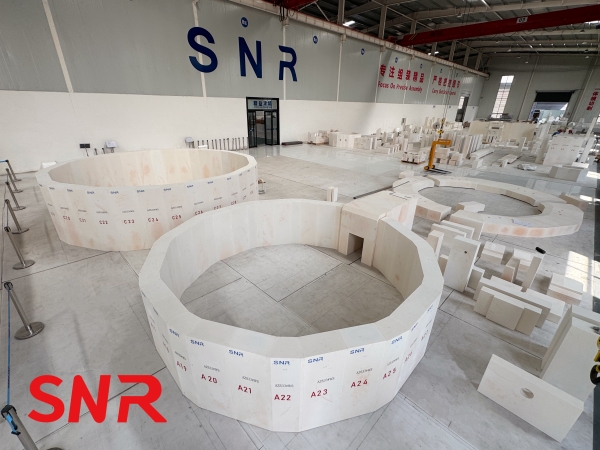
Common engineering mistakes include the use of standard AZS grades in high-fluctuation zones, insufficient corrosion-resistant materials in chemically aggressive areas, and lack of detailed furnace zoning during material planning stages.
Effective prevention requires a systematic engineering approach to furnace refractory design. Each furnace zone must be evaluated individually based on thermal profile, chemical environment, and mechanical stress conditions. Material selection should then be matched accordingly to ensure optimal performance under actual operating conditions.
Typical mismatch scenarios include:
►Standard AZS used in throat high-fluctuation zones
►Low corrosion-resistant grades used in bubbling areas
►Lack of zoning design in furnace refractory layout
Engineering insight:
Proper AZS performance depends not only on material quality, but on correct furnace zoning and engineering matching strategy.
Conclusion: AZS Cracking Reflects Furnace System Imbalance
AZS block cracking in glass furnaces is not a simple material failure phenomenon. In most real cases, it is the result of multiple interacting mechanisms involving thermal stress, chemical corrosion, mechanical loading, and engineering design mismatch.
The five key mechanisms—thermal shock, thermal gradient stress, glass penetration, mechanical stress, and material selection mismatch—represent the core failure modes that must be understood and managed in modern glass furnace engineering.
Effective prevention requires a holistic system approach that integrates thermal stability control, proper refractory zoning, optimized installation practices, and scientifically guided material selection. Only through this integrated approach can long-term furnace stability and extended campaign life be achieved.
About SNR
Henan SNR Refractory Co., Ltd. is a professional manufacturer specializing in fused cast AZS blocks for glass furnaces.
We provide engineered AZS solutions for sidewalls, throats, bottom blocks, and high-corrosion furnace zones in float glass, container glass, and specialty glass production.
Our materials are designed to withstand severe thermal cycling, molten glass corrosion, and long-term structural fatigue, helping glass manufacturers improve furnace reliability and extend campaign life.